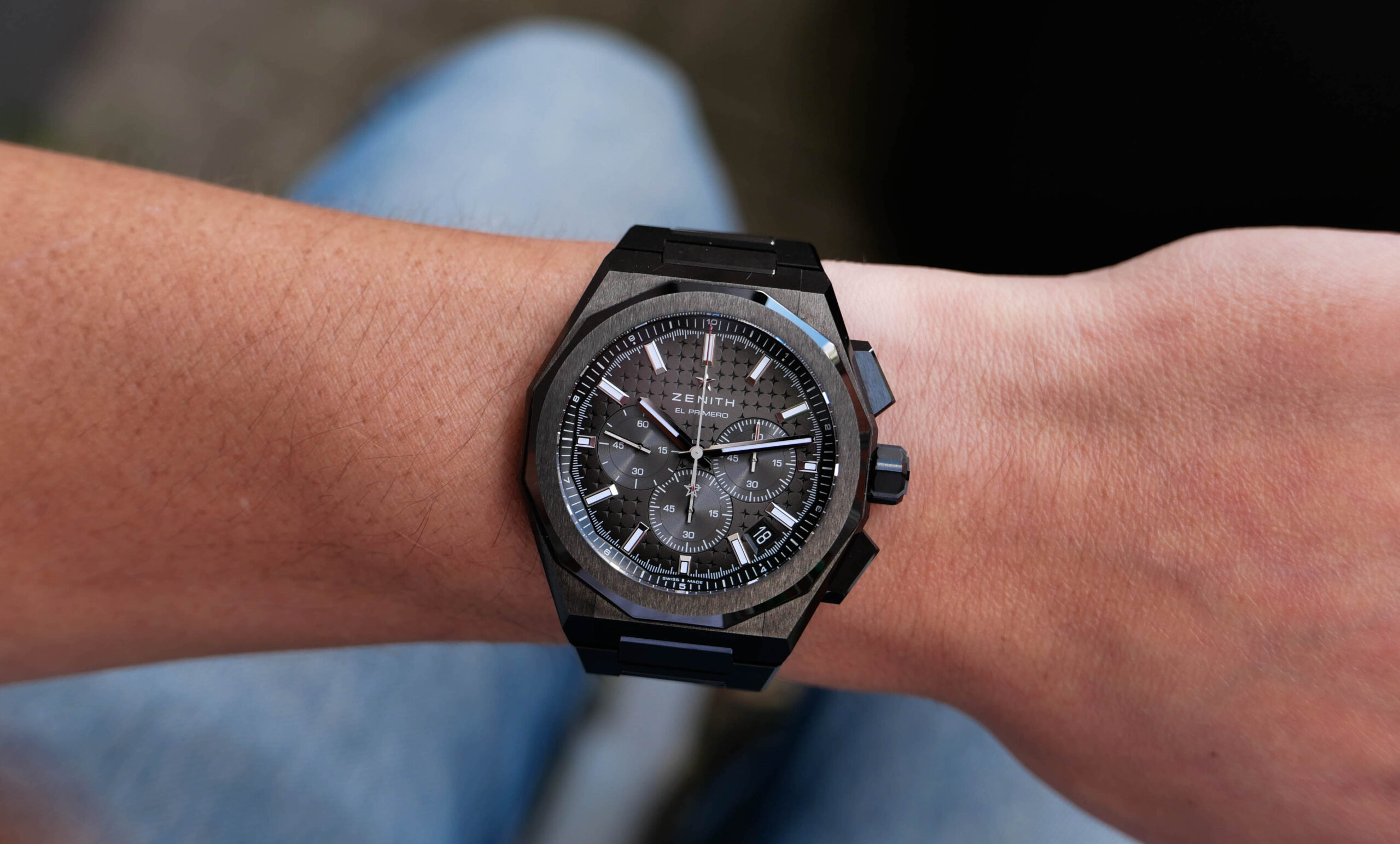
It’s not often that I refer to a watch, or its movement, as a dream, but in the case of the Zenith Defy Skyline Chronograph, that’s the overall feeling I’m left with after spending nearly 3 weeks with it. This particular fully black ceramic variant, ref. 49.9500.3600/21.I001, launched at LVMH Watch Week on January 19, 2026, but the collection itself initially debuted with a steel version in 2024.
The main ideology behind this collection, is the modernization of the of the original Defy from 1969, rather than a faithful reproduction, such as the Defy Revival A3648 we reviewed last year on the WRB.
Case Shape and Proportions
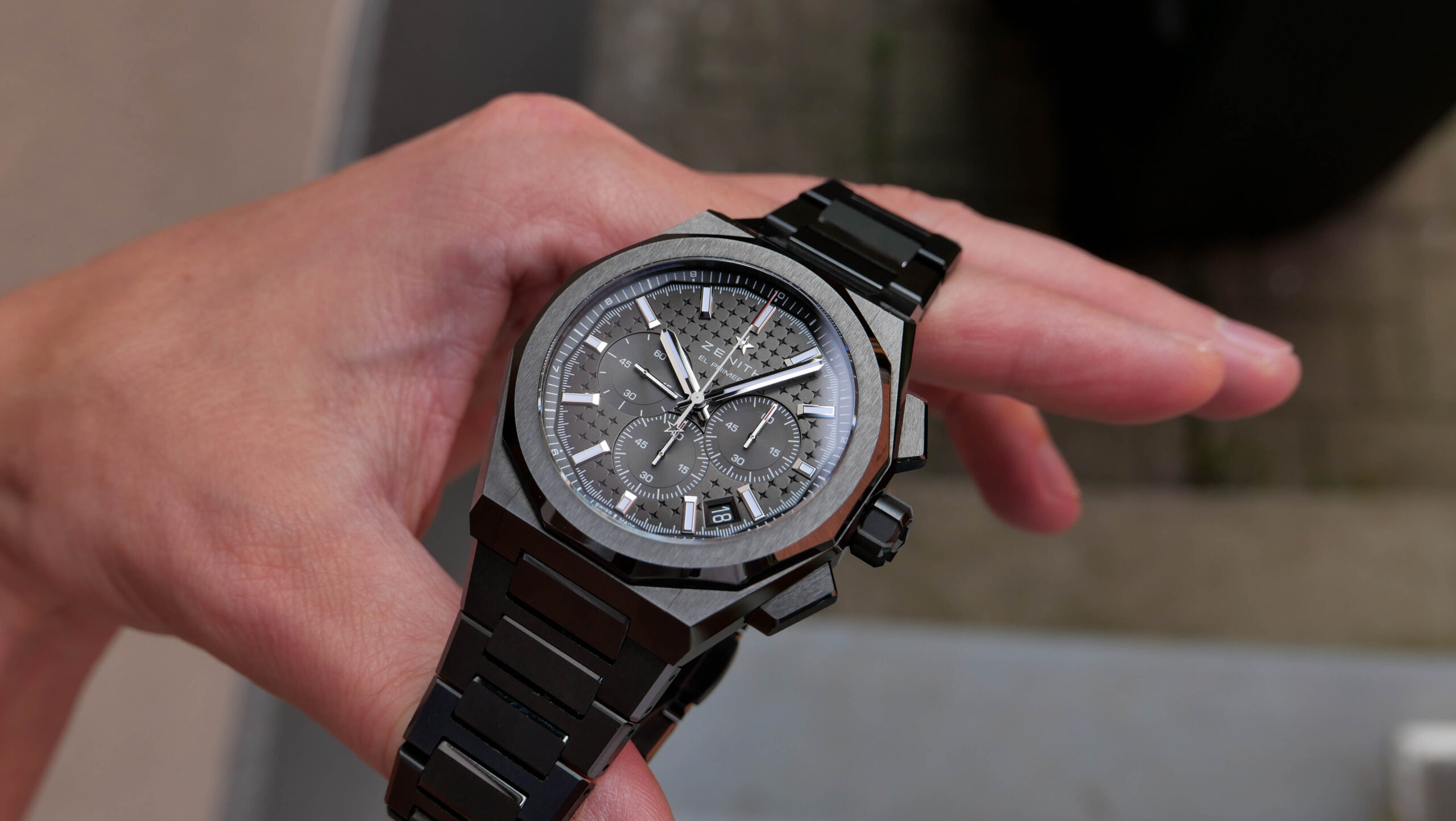
I’m making our segment on the case shape of the watch quite prominent, because it really tells us quite a bit about the watch design ideology. This is not a watch with elegant soft rounded corners, bevels and angles, it’s rather the opposite of that, being built entirely on sharp faceted edges and geometric patterns. Instead of leaning into a classic appearance, it leans heavily into a modern aggressive appearance, and one quick glance at the watch conveys this dramatically.
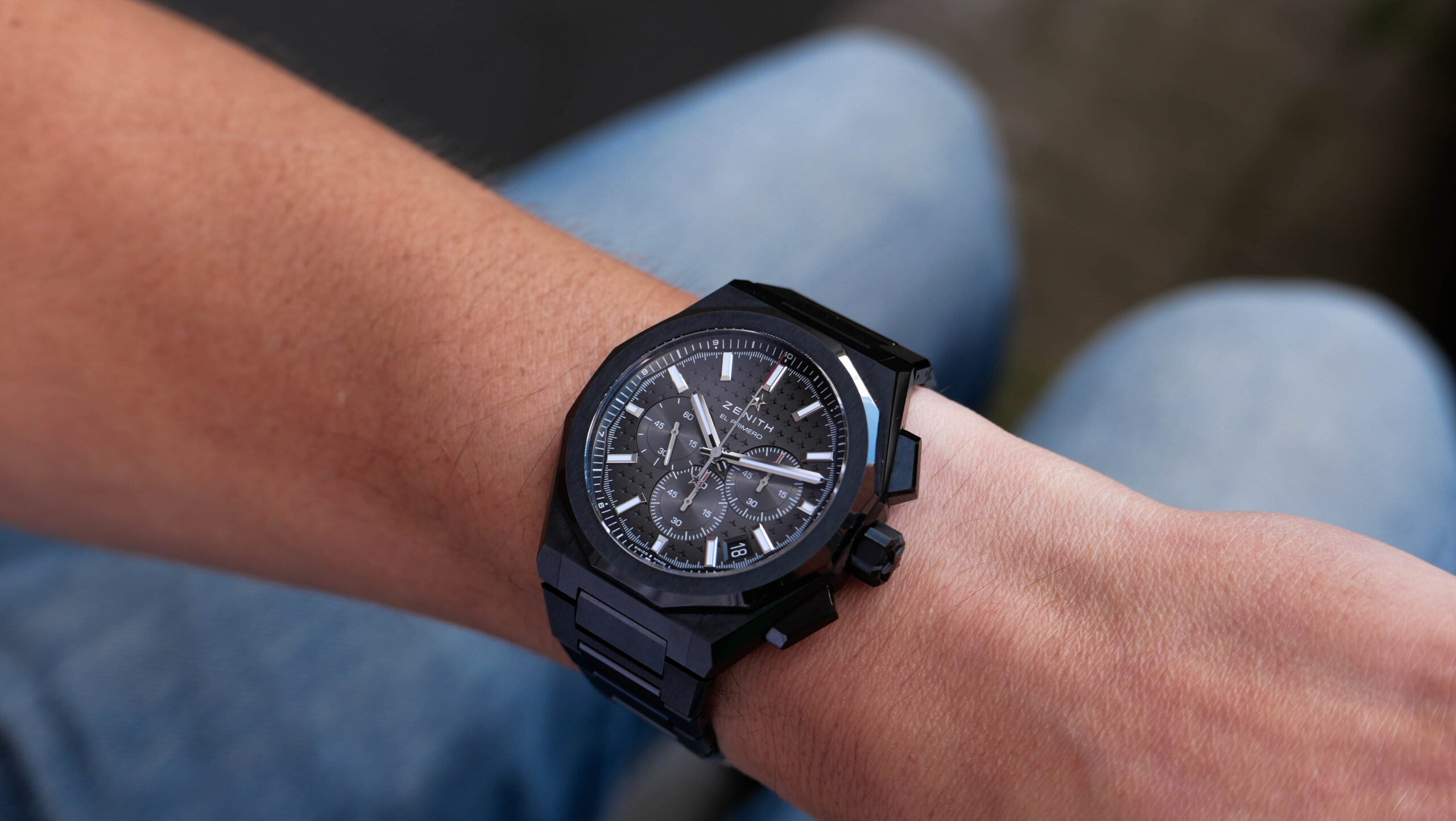
The bezel is reminiscent of the Royal Oak, however, this one here is 12 sided earning it the name of a dodecagonal bezel instead of the octagonal bezel famously found on the Royal Oak. Counter to popular belief, Zenith actually created this type of geometric bezel in 1969, which is before Audemars Piguet launched the Royal Oak. To add to the complexity of the design on the Defy Skyline Chronograph, the case is also faceted, this time with 8 sides, which offers a strong contrasting and sporty sharp edged look when viewing the watch straight on from above.
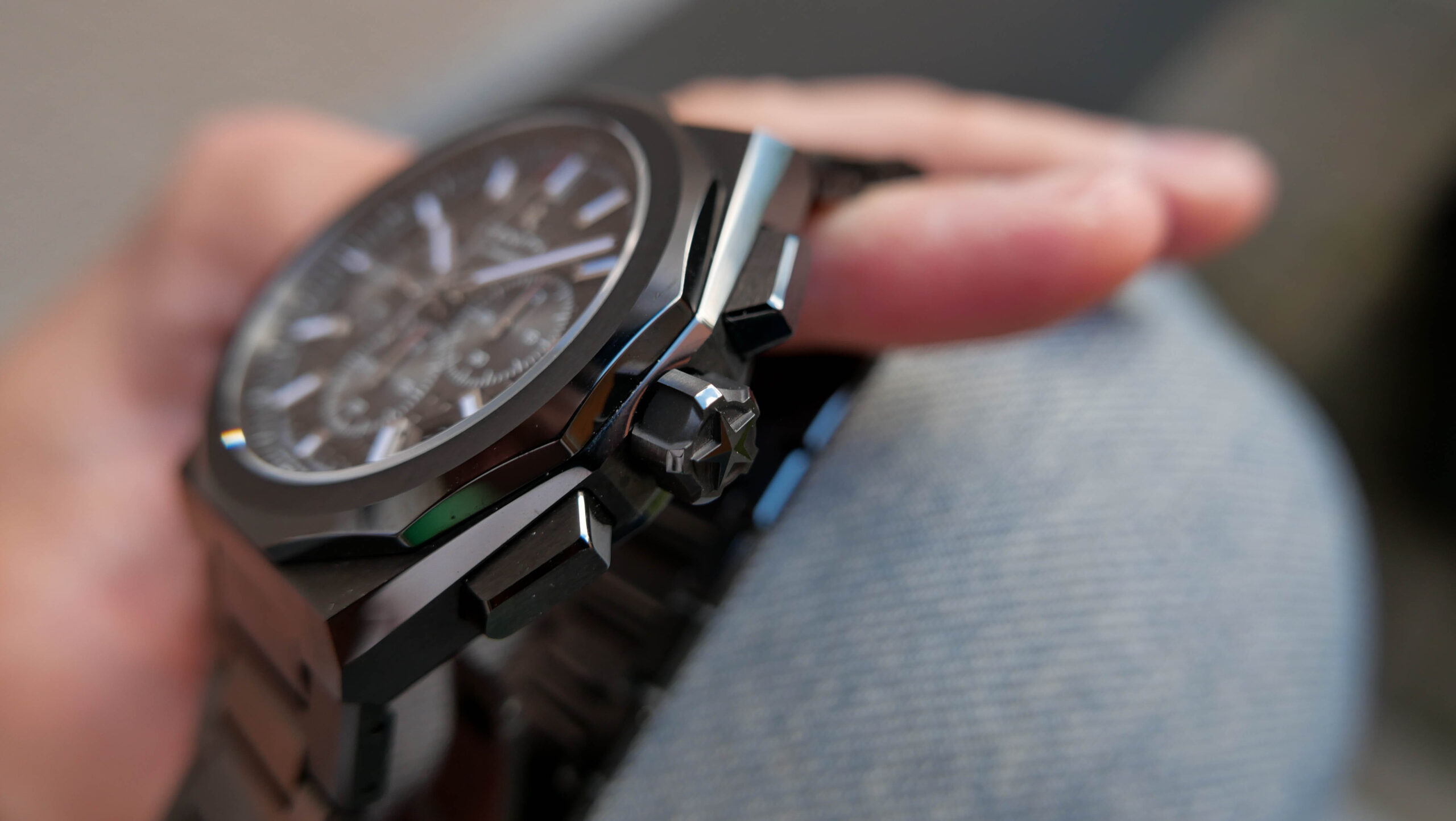
Everything else on the watch echoes this sharp strong angled appearance, from the chronograph pushers to the crown, the same geometric philosophy is applied. On the subject of the screw down crown, this is one of the very best crown designs I’ve ever had the pleasure to rotate, it has an exceptional grip due to the engraving/edges in ceramic, allowing you to have an effortless experience winding the watch or simply setting the time. The integration of the bracelet is very fluid, and flows beautifully into the case, and the ceramic links have been so precisely machined that they almost felt like steel to the touch.
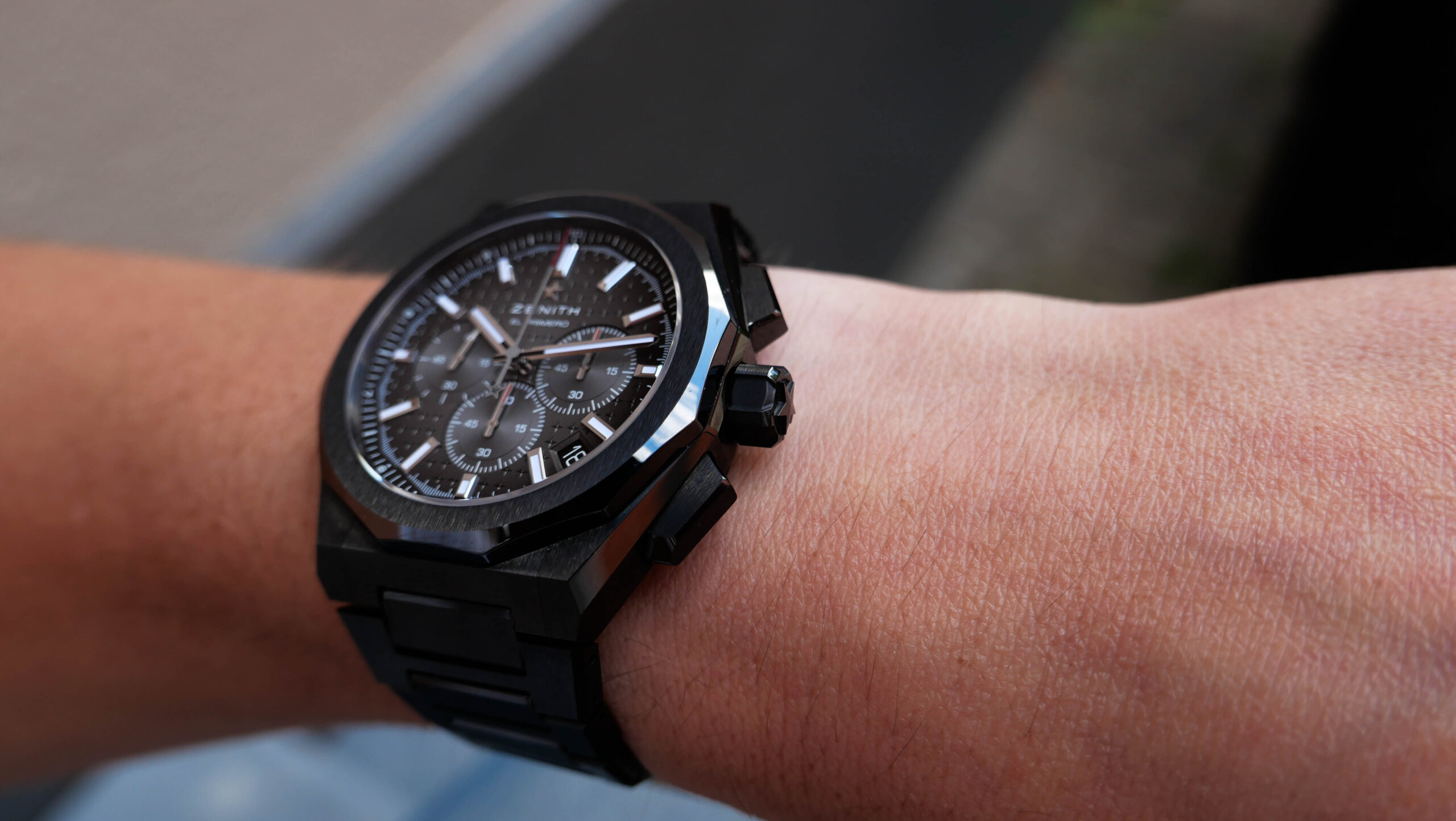
The one issue I have with this watch is more a complaint about my personal wrist size, than the watch itself. This is a large wearing chronograph at 42mm, with a lug to lug measurement of 47.4mm, but the slim 12.7mm thickness does help a little in reducing its footprint on wrist. I certainly has quite the presence on my wrist, and I was taken aback by the weight of the watch as well, considering this is an entirely ceramic watch, it has a significant heft to it, leading me to believe the movement is the culprit here.
Dial Appearance
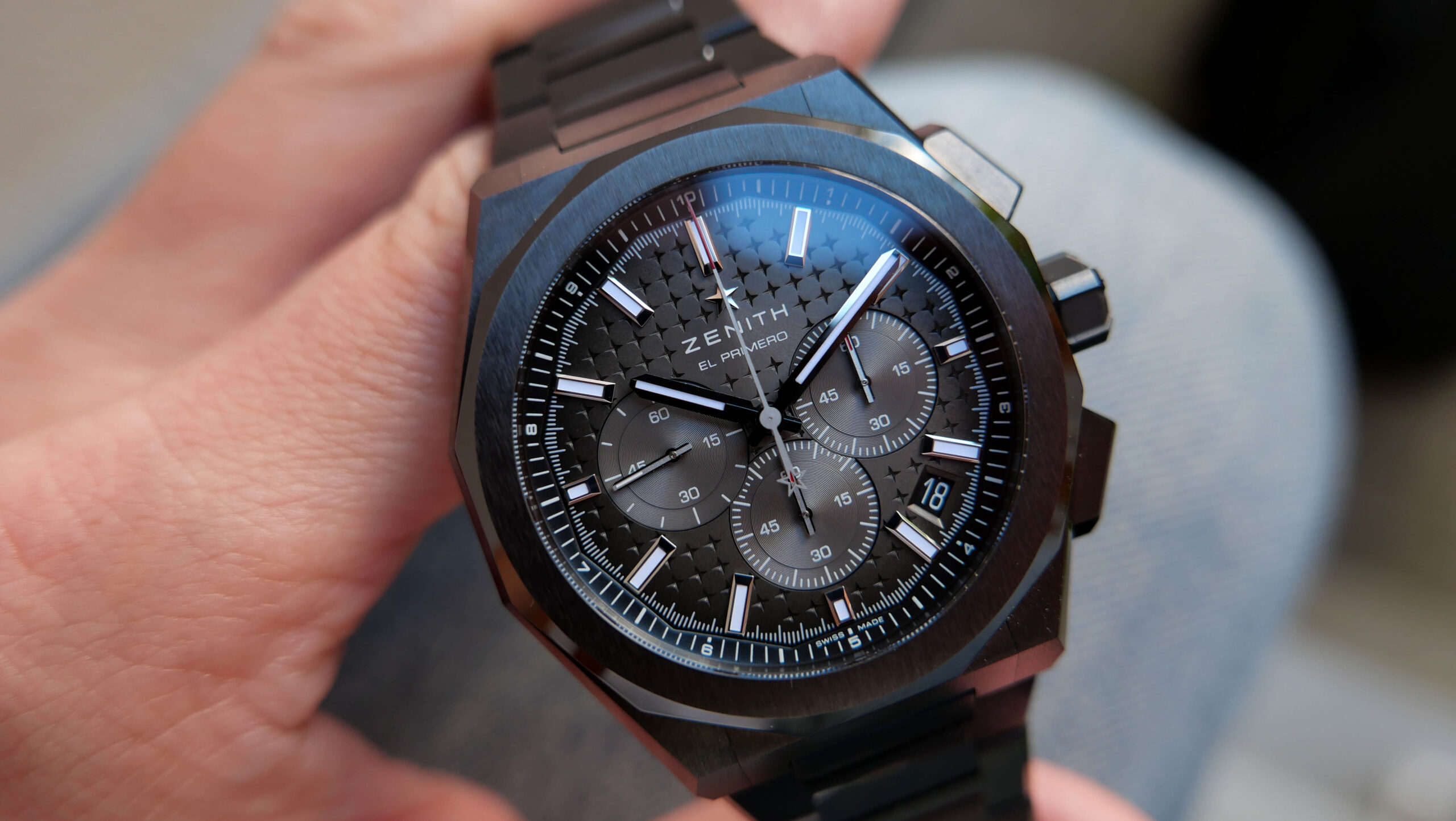
The dial itself is also quite substantial in size, with quite a lot of different types of engraved finishes and stylizing, you just have to be prepared for a rather busy layout, there’s no two ways to it. The dial is actually a very deep charcoal gradient that shifts depending on light, and it’s coated with small four-pointed Zenith stars that Zenith calls its “starry sky” pattern. Even with the dial being nearly black, the mini engravings are very prominent, and could be a decisive feature for many potential buyers interested in this watch.
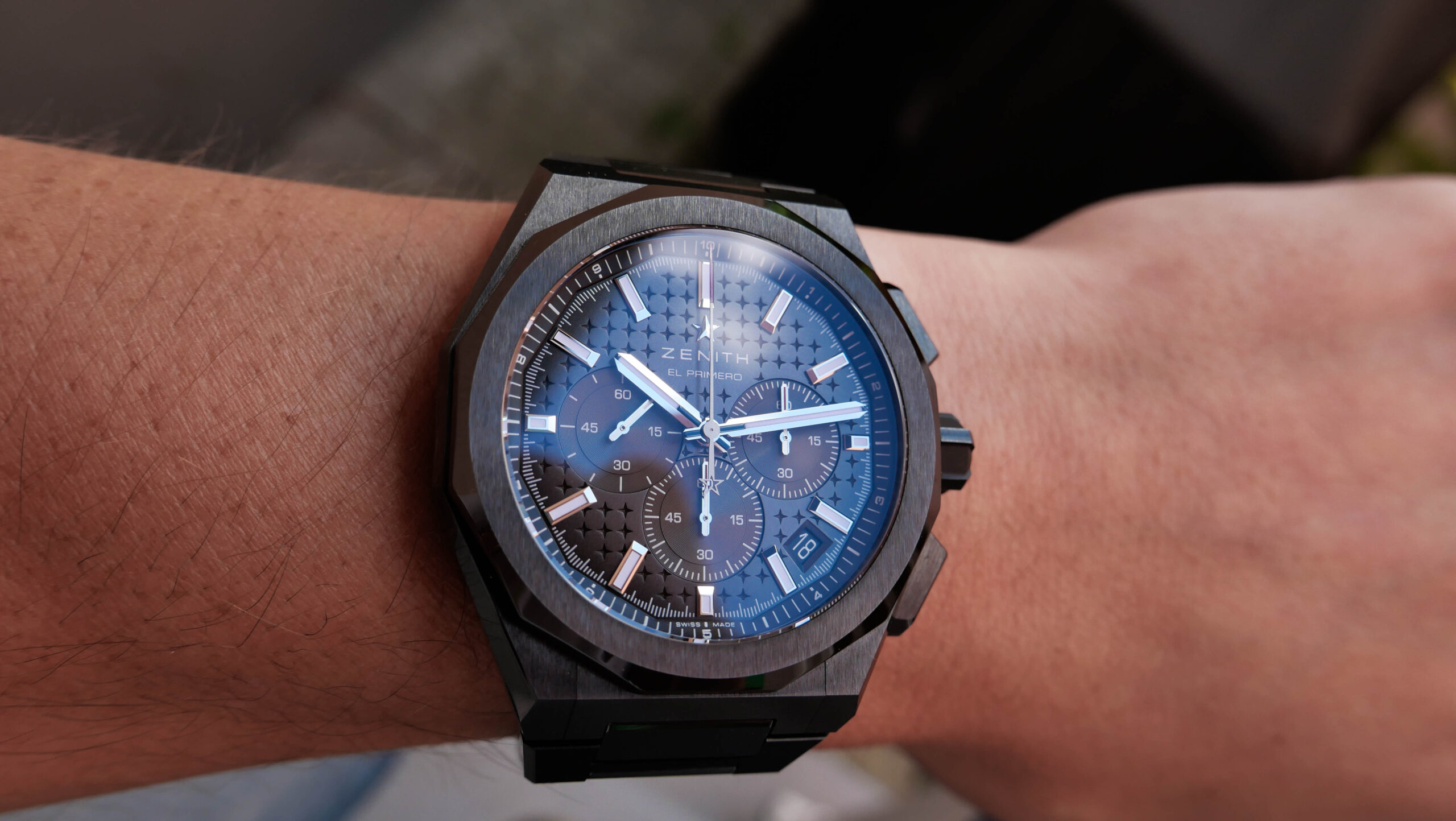
Despite the busy styling of the dial, the global layout actually follows a fairly normal form, with three subdials in their traditional positioning at 3, 6, and 9 o’clock. The big attraction of this watch is a feature you’ll only notice when actuating the chronograph, which is of course its ability to record tenths of a second timing. The large chronograph hand sprints around the dial once every ten seconds, in such a smooth and calibrated manner that you’d assume it’s battery operated, it’s very impressive to witness in action.
Instead of the outer chapter ring being round in form, it too is also faceted in a geometric manner, framing the dial again in a more sporty and modern way. The baton markers and Zenith emblem are applied, and the handset it rather subdued in appearance when considering the rest of the watch. There are small dabs of red on the chronograph hand, as well as on the hands for both the 60-second and 60-minute counters.
Cutting Edge Movement
As we’ve touched on regarding the tenth of a second chronograph ability, this is only achieved due to the El Primero 3600 ability to run at a high 5Hz frequency. What’s rather remarkable is that even the original 1969 El Primero ran at 5HZ, but this current modern iteration takes advantage of modern advancements to actually have the chronograph hand speed around the dial with the tenths being recorded directly on the dial for immediate reading. This is essentially achieved by using a silicon escape wheel, rather than the fourth wheel that was used on the older El Primero 400 movement.
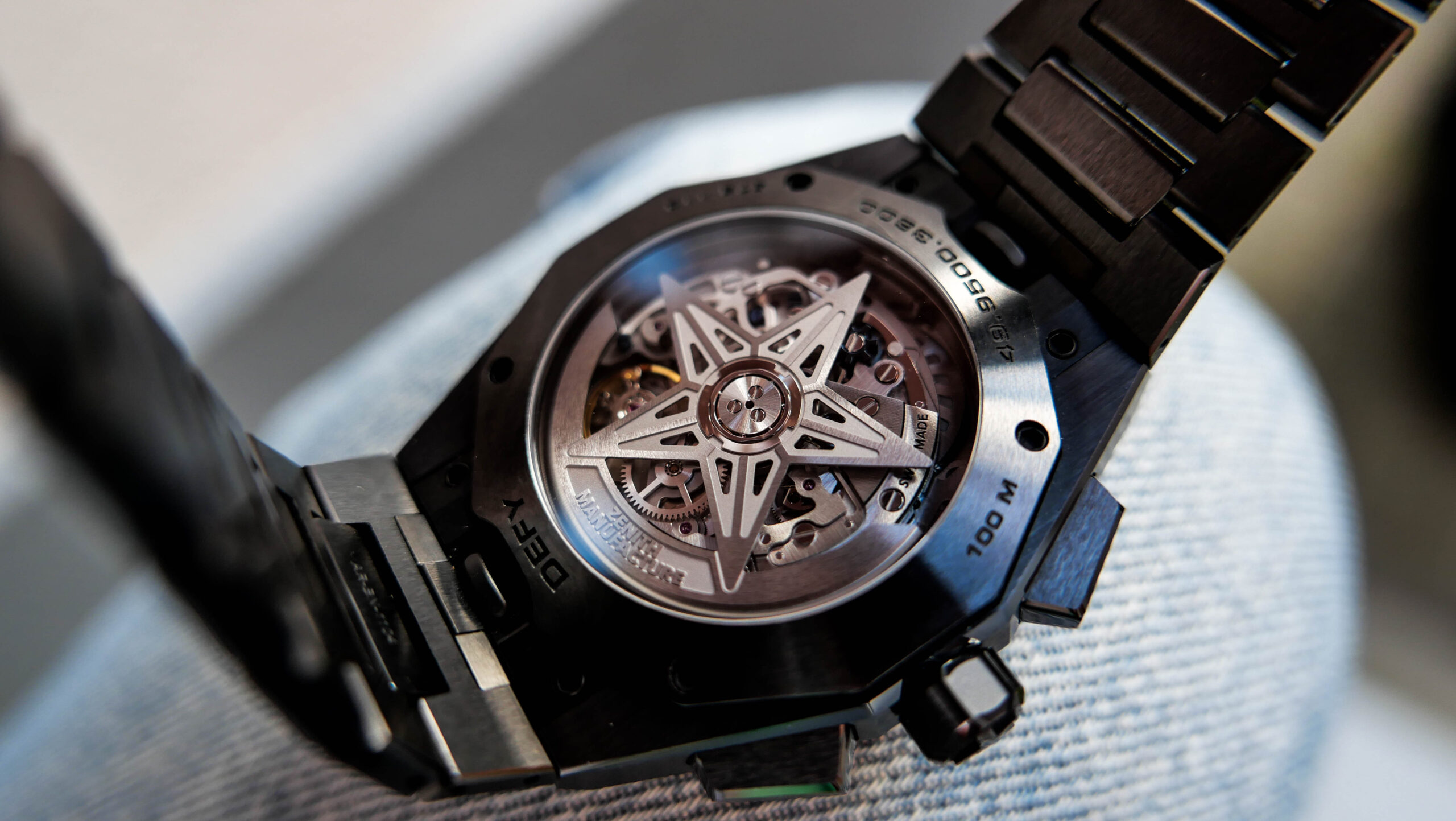
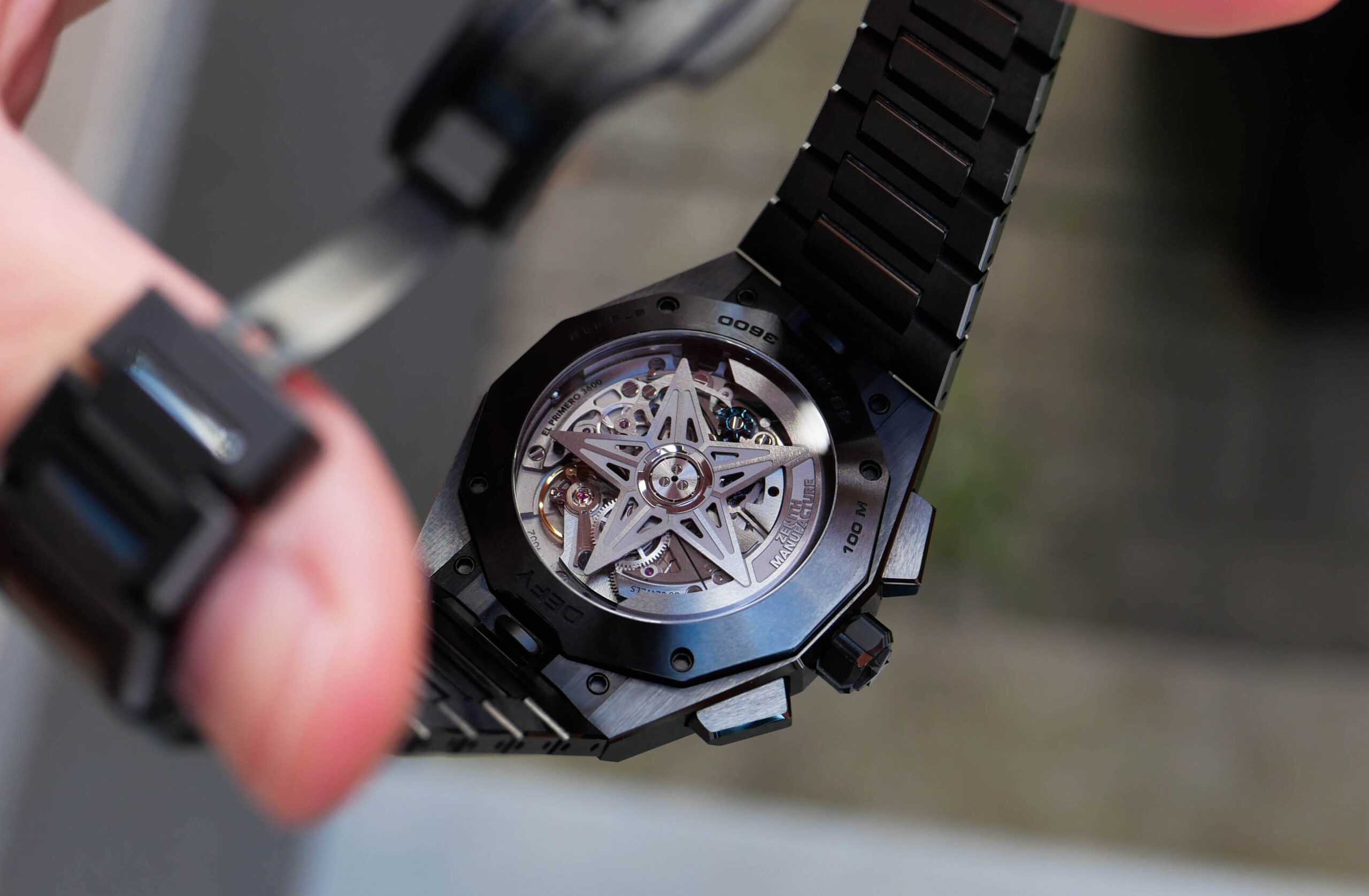
As expected, Zenith has provided us the ability to view this wonderful movement through an exhibition caeback, and through this window you can witness the actual engagement of the chronograph mechanism, including the prominent blue column wheel. The movement uses other advanced techniques that help it run, including many silicon components that reduce weight and are non-magnetic, for example the escape wheel and pallet lever.
The movement is very well finished, however not really to the degree we’d consider high-horology, it’s still very well done, and features some unique designs like the openworked Zenith star rotor you see swinging around the movement. It looks cool, but it was also a clever implemantion that allows us to see more of the movement in action as it provides minimal physical coverage. The movement appears very mechanically busy, making it very enjoyable to examine, and some metal finishing techniques you can spot include circular graining, brushing, and polished edges.

Leave a Reply