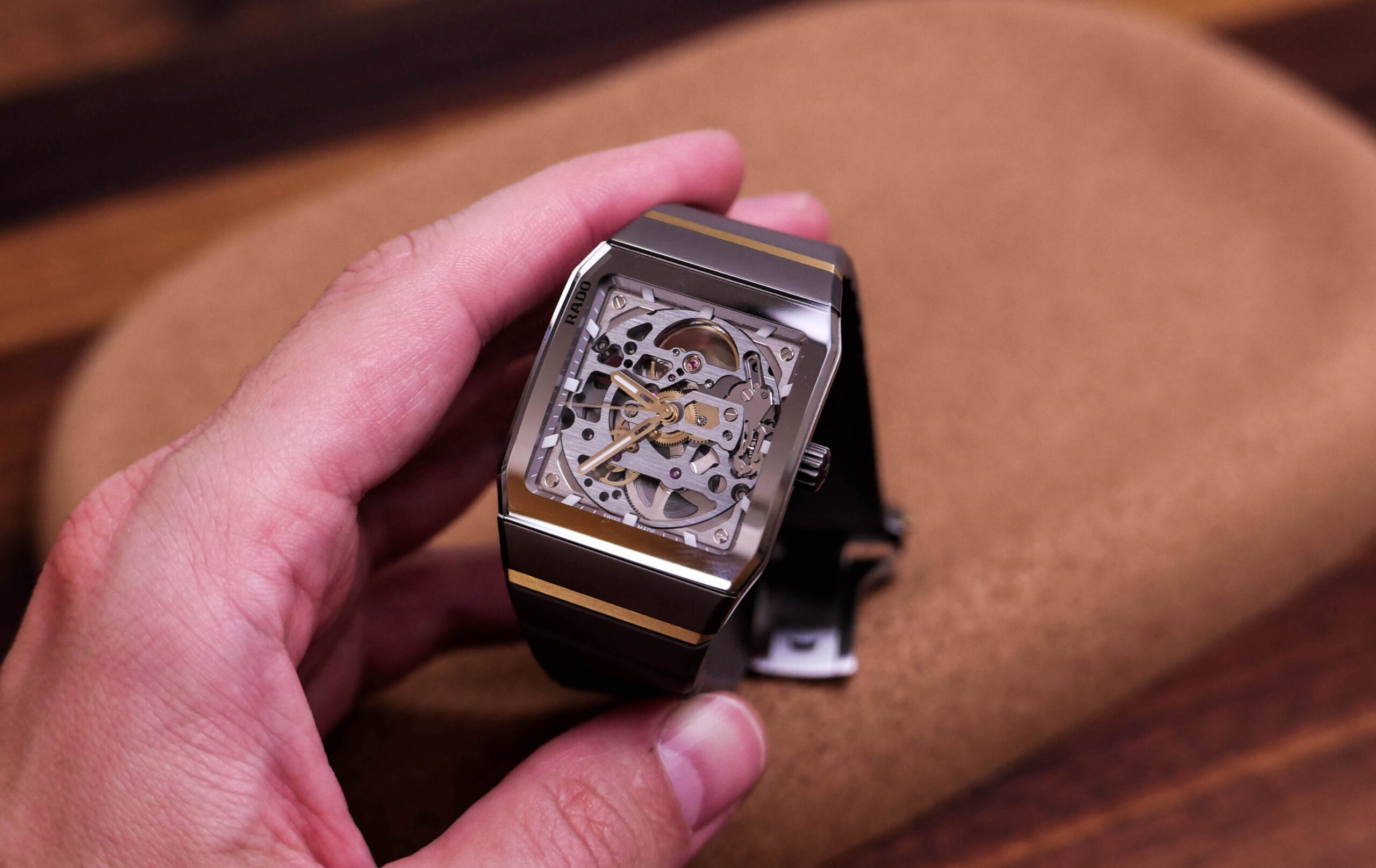
It’s a rainy autumn day over here in Montreal, and after a few challenging days with the kids at home, I’m finally getting some time to put my thoughts down in writing with a clear mind, about my experience with the fantastic Rado Anatom Skeleton. I managed to enjoy about three weeks with this watch, feeling it on wrist, gazing at it on my desk, and attempting to take some nice photos and video of it. It didn’t take very long to come to the conclusion that this is a very special rectangular watch, it’s not a shape or design you come across very often, if at all, and it’s quite apparent to me that Rado has probably spent significant resources making it so since the initial Anatom collection debuted way back in 1983.
The Anatom has always been about its ergonomic curvature that’s designed to take the shape of your wrist, which I believe is the reason why the name Anatom is so close to the word “anatomy”, referencing the build and function of the human body, and kind of relating the watch as an extension to this. However, the variant we have today which is the Ref. R10206109, takes things to a new level, by introducing the first ever skeletonized dial variant exposing the calibre R808 from the front, as well as the use of Plasma high-tech ceramic on certain parts of the watch.
Silky Experience on Wrist
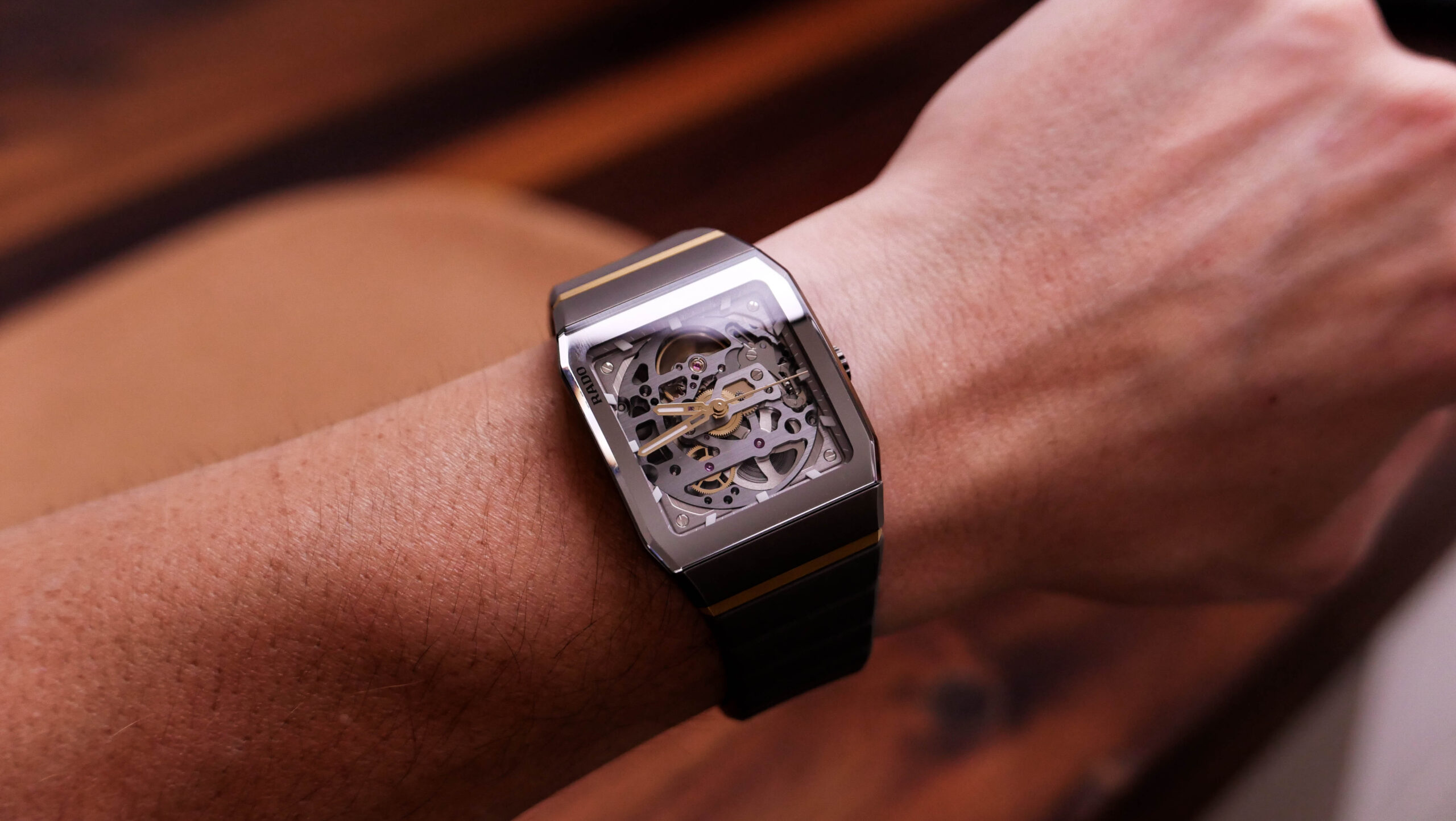
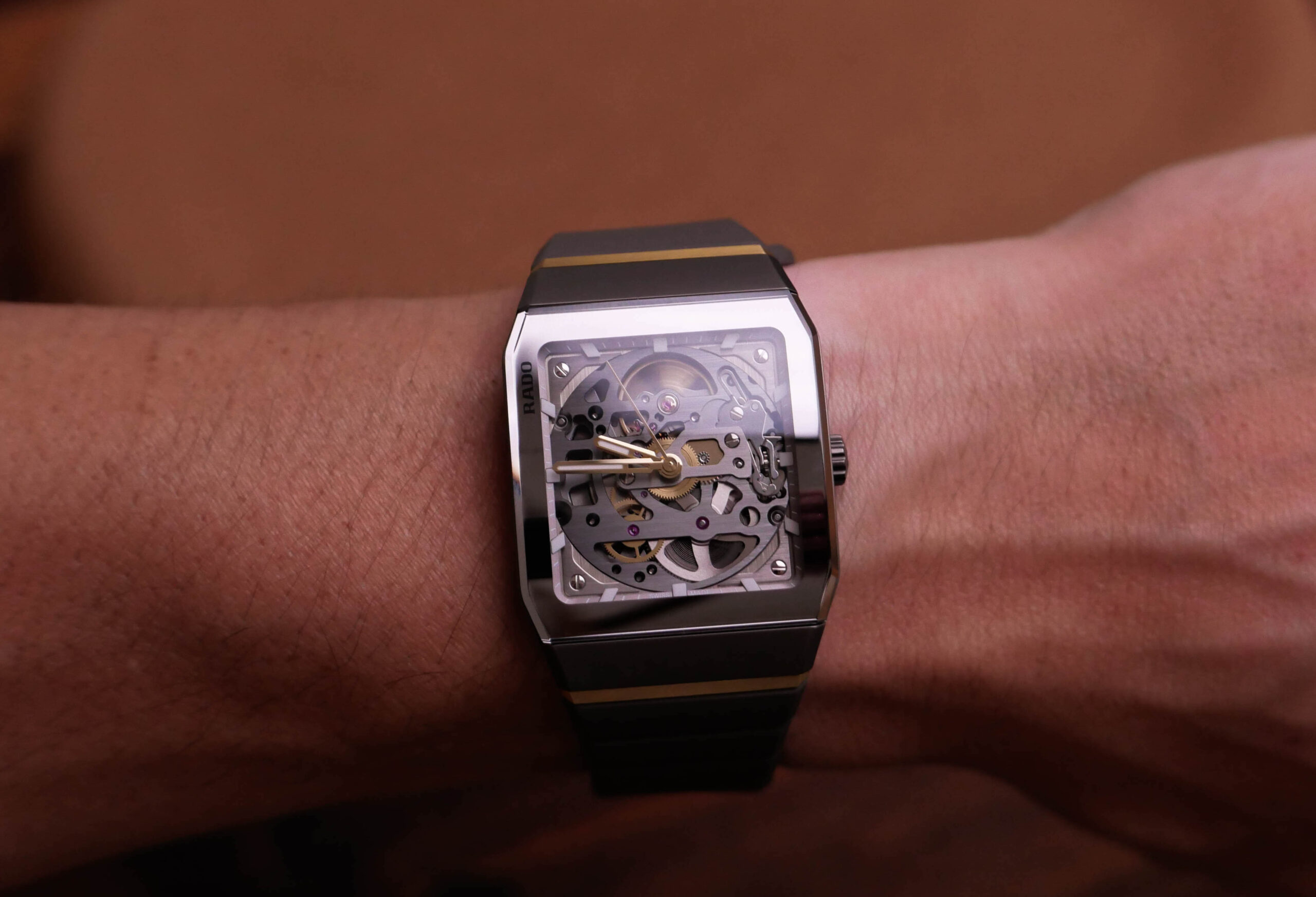
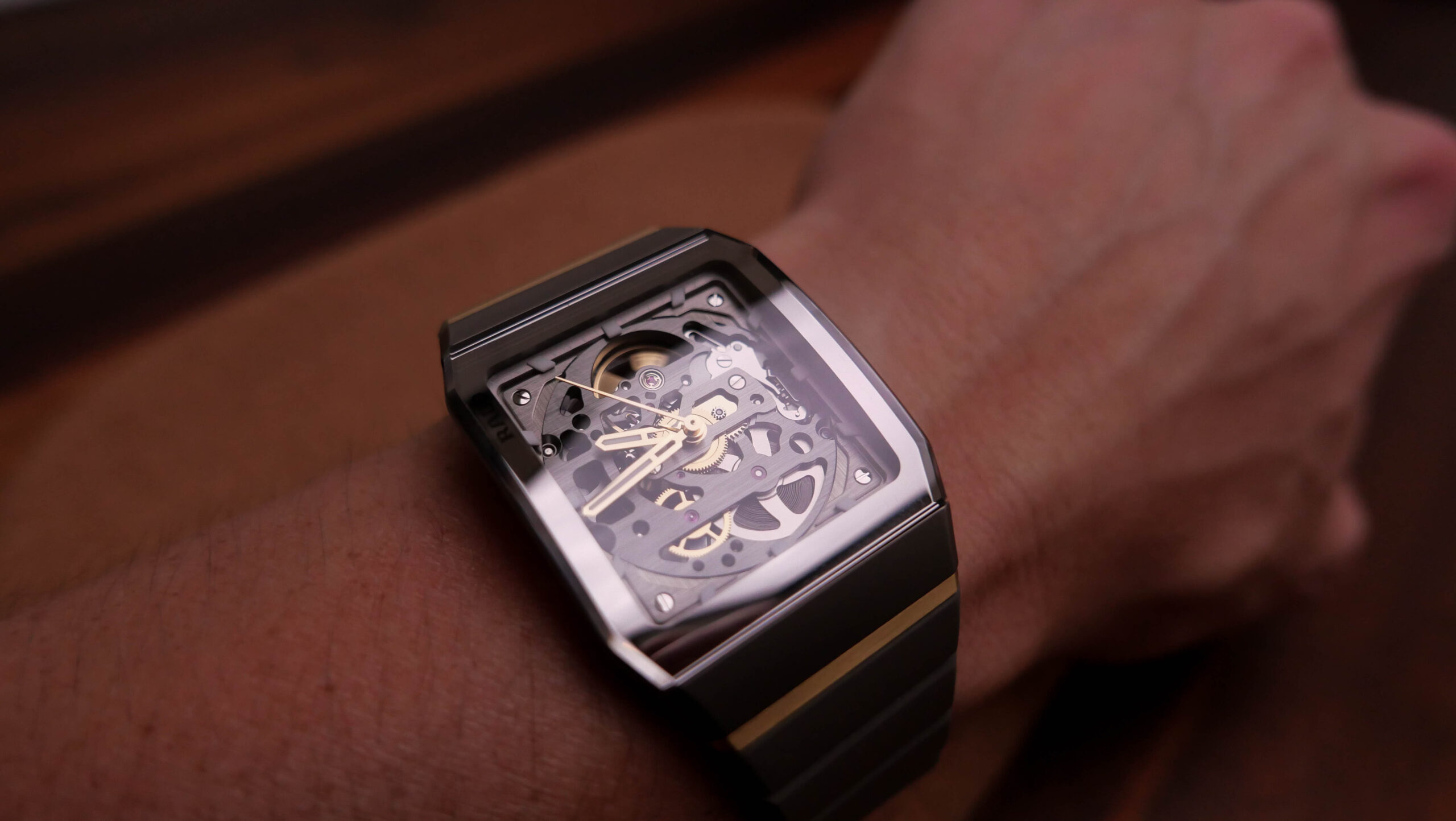
There should be no surprise, that a watch priced at $4,600 USD built to be comfort oriented, is indeed very comfortable on wrist. For reference, I have a 6.5 inch wrist size, and I felt the watch sat perfectly centered on my wrist, and the curvature of the case and crystal combined with the rubber strap made it very enjoyable to wear for extended periods of time. Keep in mind, this is a rectangular watch with a very slim crown that’s only 32.5mm wide, allowing for excellent lateral and up/down movement of your wrist.
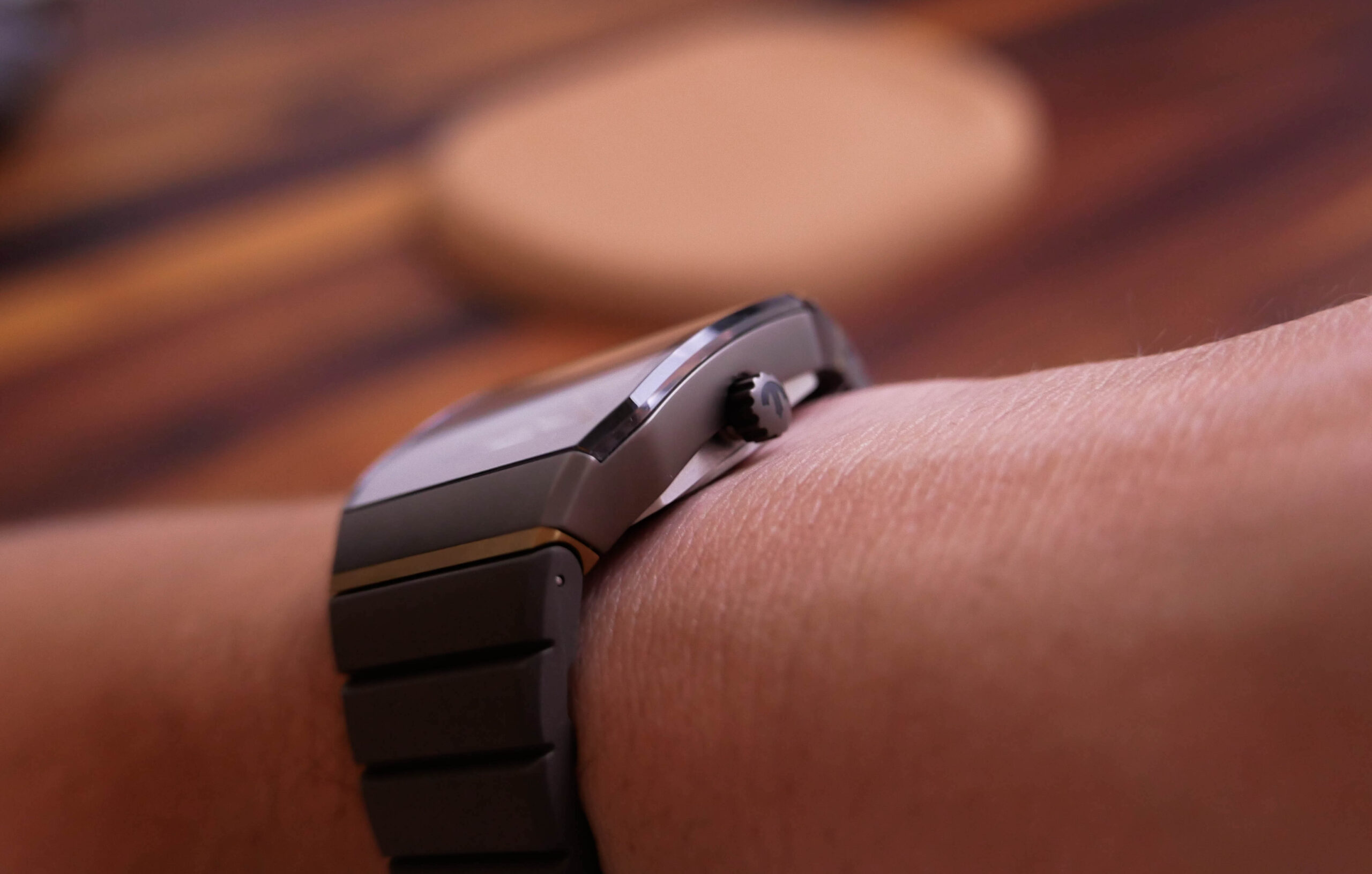
Interestingly, the watch is 46.3mm long, which on paper is still quite substantial, but due to the ergonomic curvature it fits much more compact than the numbers would suggest, while also keeping solid wrist presence. Usually rectangular watches with similar dimensions to this can at times feel too large or dressy, but the Anatom was just right, allowing for a nice modern and sporty fit. The case is also only 11.5mm thick, but due to the curvature, it does feel like it protrudes higher at the center of the watch due to its rounded nature when you’re wearing it. Normally a thin rectangular watch like this would appear very flat on wrist, with the four corners, or lugs, protruding awkwardly depending on size, but the ergonomic form of the Anatom mitigates this issue completely.
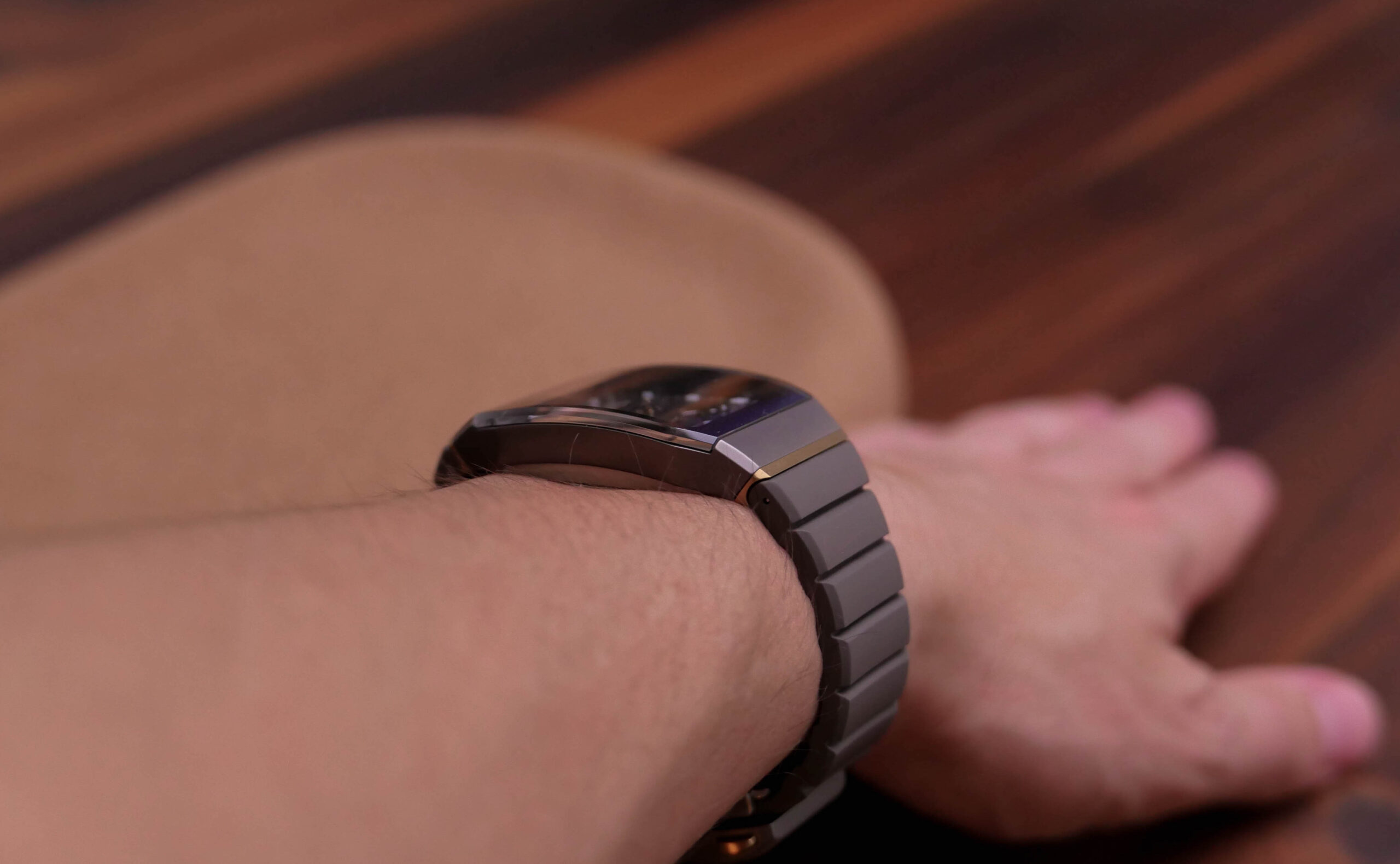
I found the rubber strap to be very intriguing, somehow Rado has managed to color match it accurately to the deep “space age” grey hue found on the case of the watch. At a distance you’d be hard pressed to know what the strap is actually made from, and due to the indented rivets mimicking the look of links, it can take on an almost metal mesh like appearance. The integrated section where the strap meets the case is perfectly executed as well, and it does indeed look like a traditional integrated bracelet watch, and its flexibility again allows for more comfort on wrist. All of these design choices factor in to create a remarkably lightweight watch at only 87.6 grams, and the Anatom is undoubtedly the most comfortable rectangular watch I’ve ever had the pleasure of wearing.
Open Dial
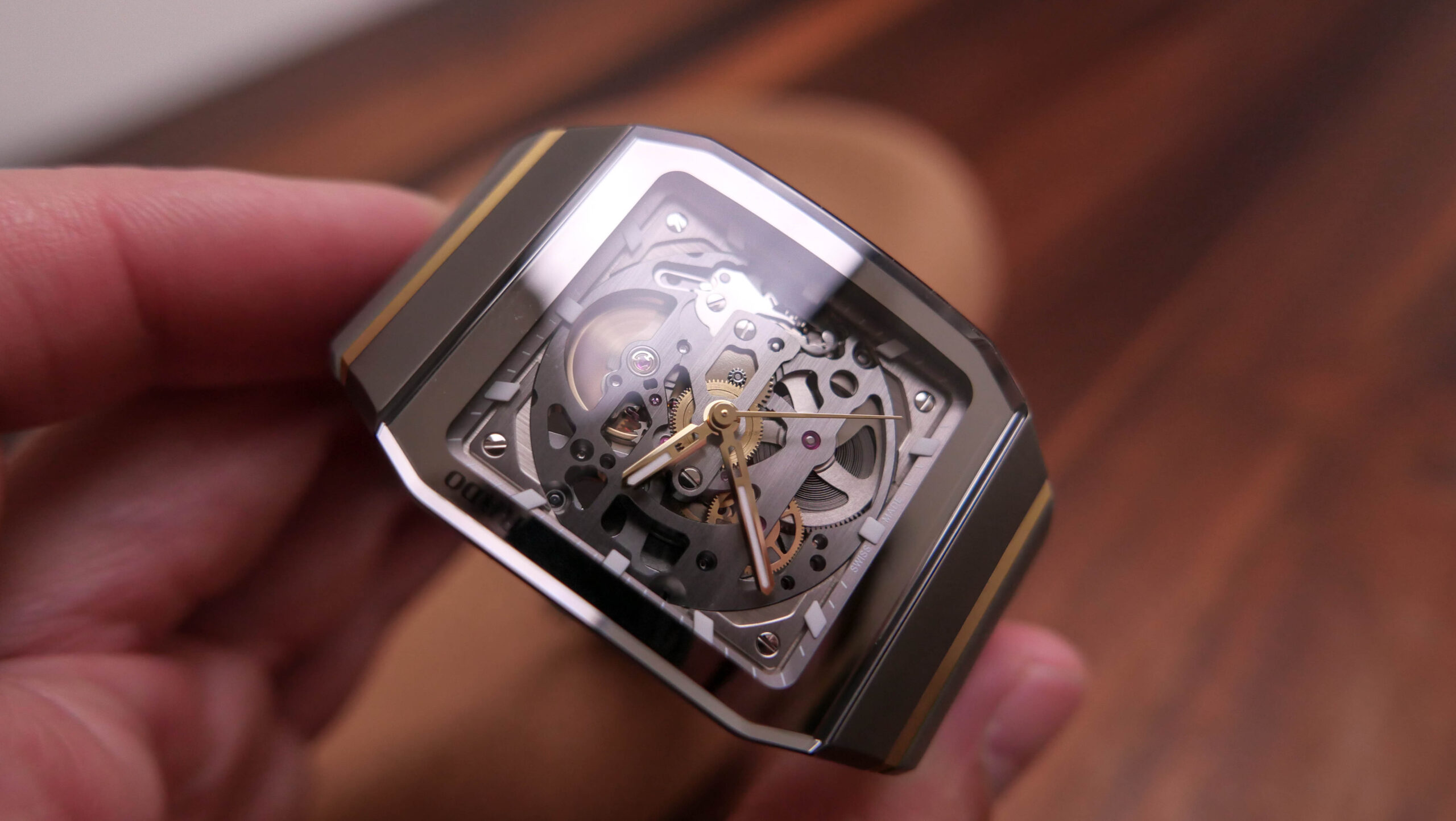
On most of the Anatom collection you get traditional dials with baton markers, a set of stick hands, and some playful dial gradients can be had as well. The variant we have here is of course fully skeletonized with an open work dial, displaying the front of the calibre R808. The skeletonized dial truly augments the entire aura of the watch, from a creatively designed and ergonomically fitting watch, to now what almost appears to be otherworldly.
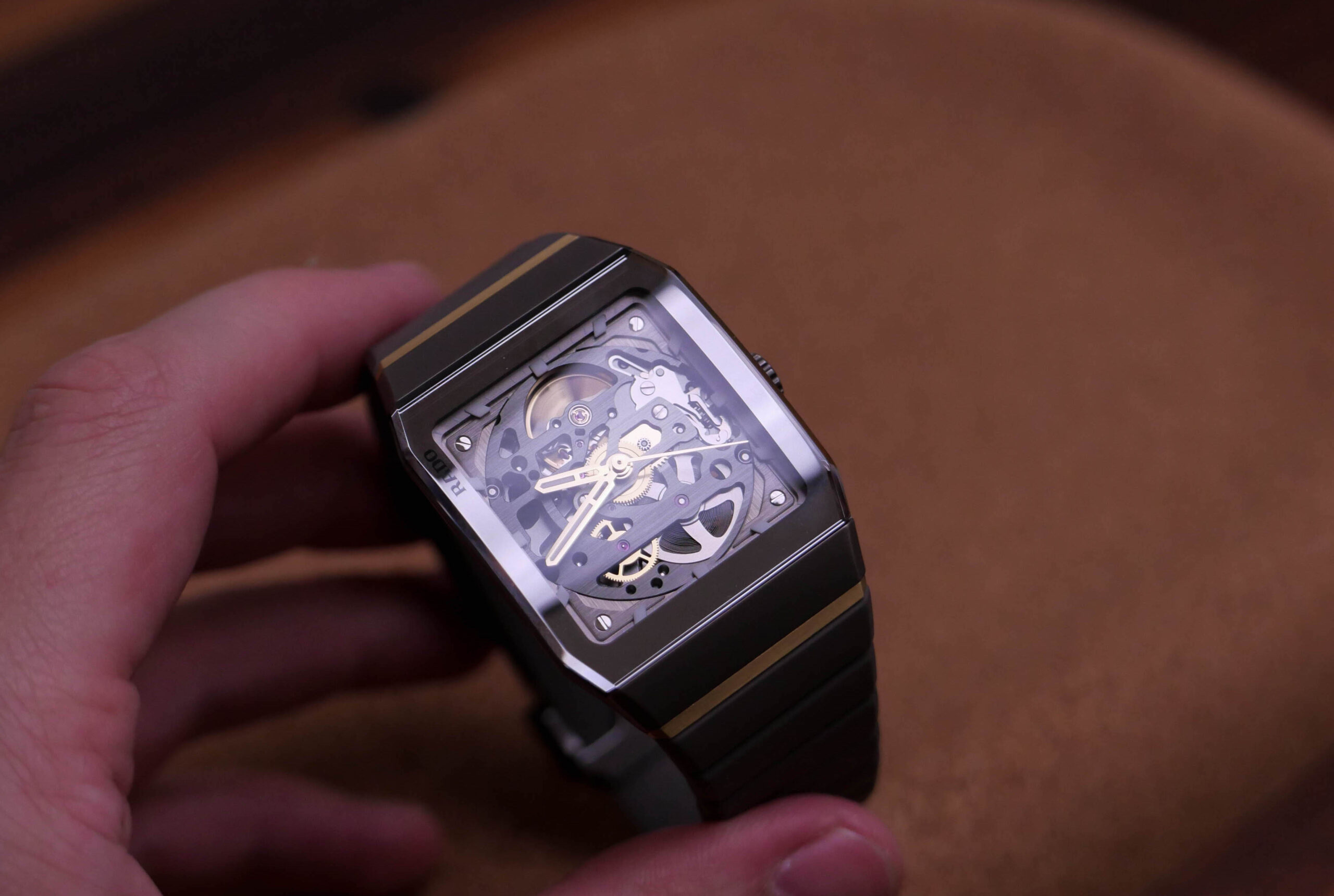
There’s a very cohesive flow to the skeletonized dial, with yellow gold matched components like the hands and geared wheels matching the gold accents on the rubber strap. There’s even multiple shades of grey throughout the dial that match the ceramic and steel case of the watch. Some sections are as dark as matte anthracite, with some areas appearing lighter with a polished nickel or rhodium colored shade. There’s so much happening mechanically, out in the open, that you may not even notice the applied bright white hour markers, and despite their high contrast appearance seem to take a backseat at the show. The play between different metal finishings also allows the dial to catch the light gloriously, giving off the appearance of a very intentionally designed skeleton dial rather than just a cheap attempt at displaying the movement from the front.
Some of the parts that are visible include the balance wheel and Nivachron hairspring around the 12 o’clock position, which are of course in motion as you tell the time. Closer towards the center of the watch is more movement to be found, this time it’s the slower wheel train that is transferring energy through the movement. One particularly neat visual feature is the “keyless works” winding and setting mechanism, which is also visible in action when you pull the crown out and set the time or simply wind the watch. Other parts such as jewels, bridges, and plates are also visible on the dial section, which adds some tasteful complexity and light flecks of color to what is a rather monochrome layout.
Modified ETA Calibre R808
With so much emphasis on the movement of the Anatom Skeleton you’d be inclined to lean into the thought that it’s produced completely in-house, but it’s actually based on the ETA C07.901 architecture, a derivative of the well known Powermatic 80 family. It might feel like a slight letdown, however that’s not really the case, as this movement is extensively modified specifically for this watch, including all of its skeletonized attributes.
The R808 is also not COSC certified, however Rado puts it through their own independent rigorous testing, including a five-position testing which is actually more extensive than their usual 3 position testing. Additionally, if the front view of the movement isn’t enough for you, there’s also an exhibition caseback to allow you to enjoy both sides of this movement.
The R808 is not exclusive to the Anatom Skeleton, as it’s also found in the Captain Cook High-Tech Ceramic Skeleton, True Square Skeleton, and the DIaStar Original Skeleton. Despite it’s overworked appearance, essential traits have not been emitted, as the movement still manages to hold an impressive 80 hours of power reserve.

Leave a Reply