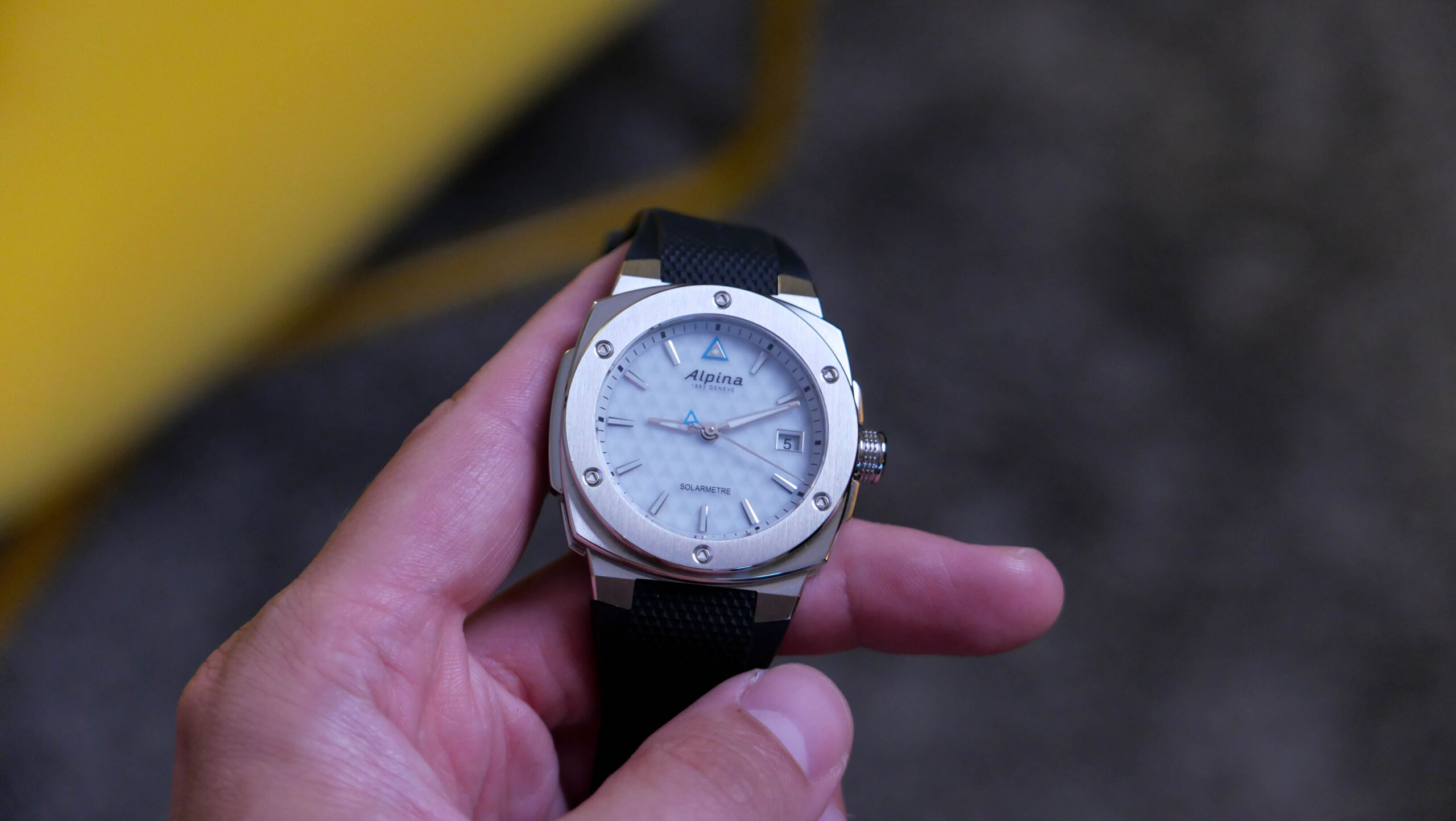
Today we have a hands-on review that’s going to be focusing on a solar powered watch from Alpina, called the Alpiner Extreme Solarmetre. Admittedly, and it’s not really a secret of mine, but I’m not overly enthusiastic when it comes to quartz watches, or solar powered movements. Sure, they’re extremely efficient, accurate, and the technicalities behind their energy gathering abilities from a sun source is cool, but many of us enthusiasts find deeper interest in actual geared mechanical movements. This is not unlike the widely conveyed comparison of a manual transmission car, vs an automatic car, and now hybrid and electric power systems.
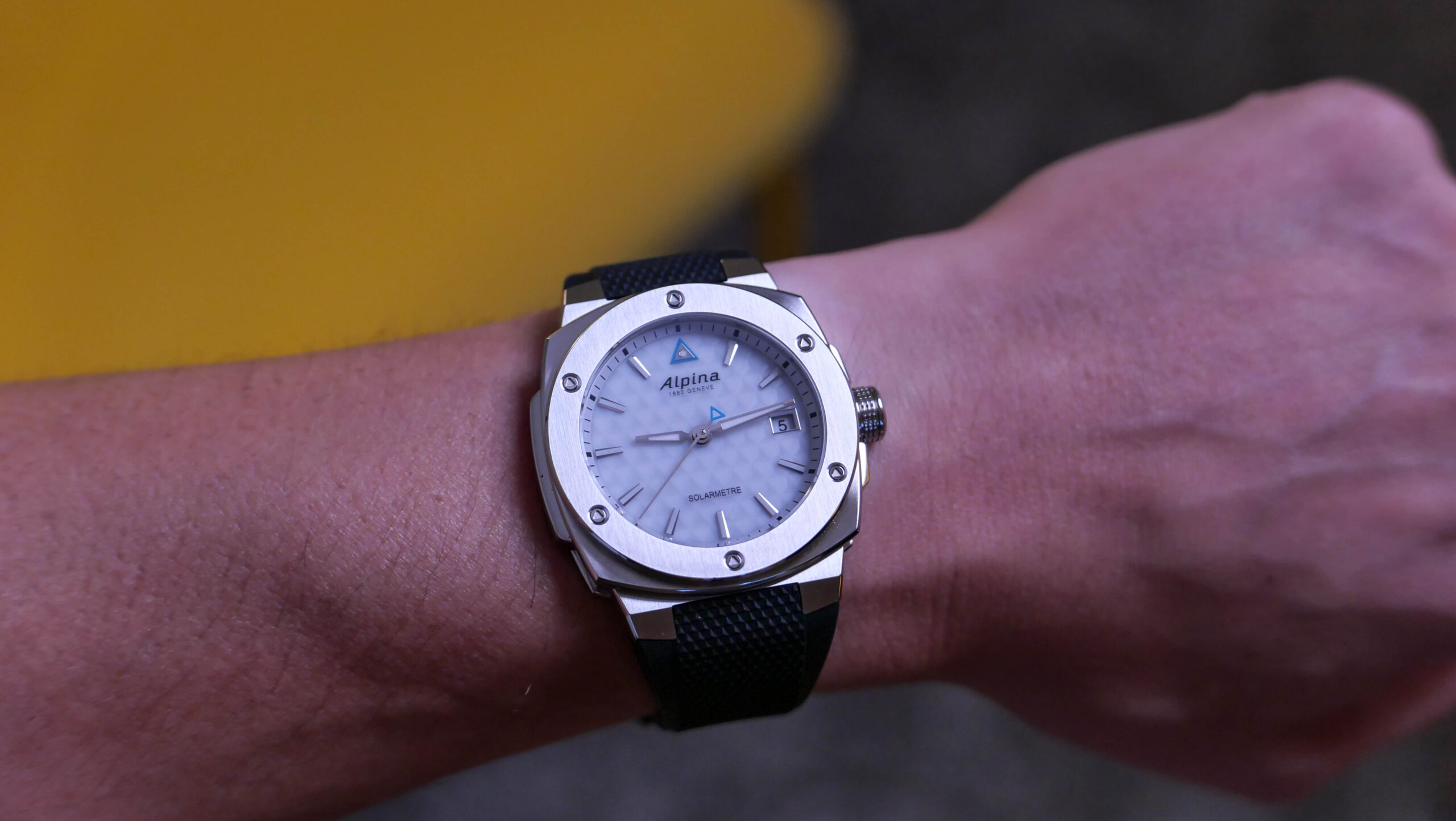
With that said, Alpina is a fantastic watch brand, and there’s no harm in them delving into another universe of watchmaking, which by the way, the Alpiner Extreme Solarmetre being their first ever solar powered watch. The great news here being that we’re getting a watch that carries with it everything Alpina is known for, from their exceptional build quality, sports watch heritage, and reasonable pricing – this time with a solar Swiss-made AL-140 calibre instead of their more predictable Sellita or in house movements.
Case Design
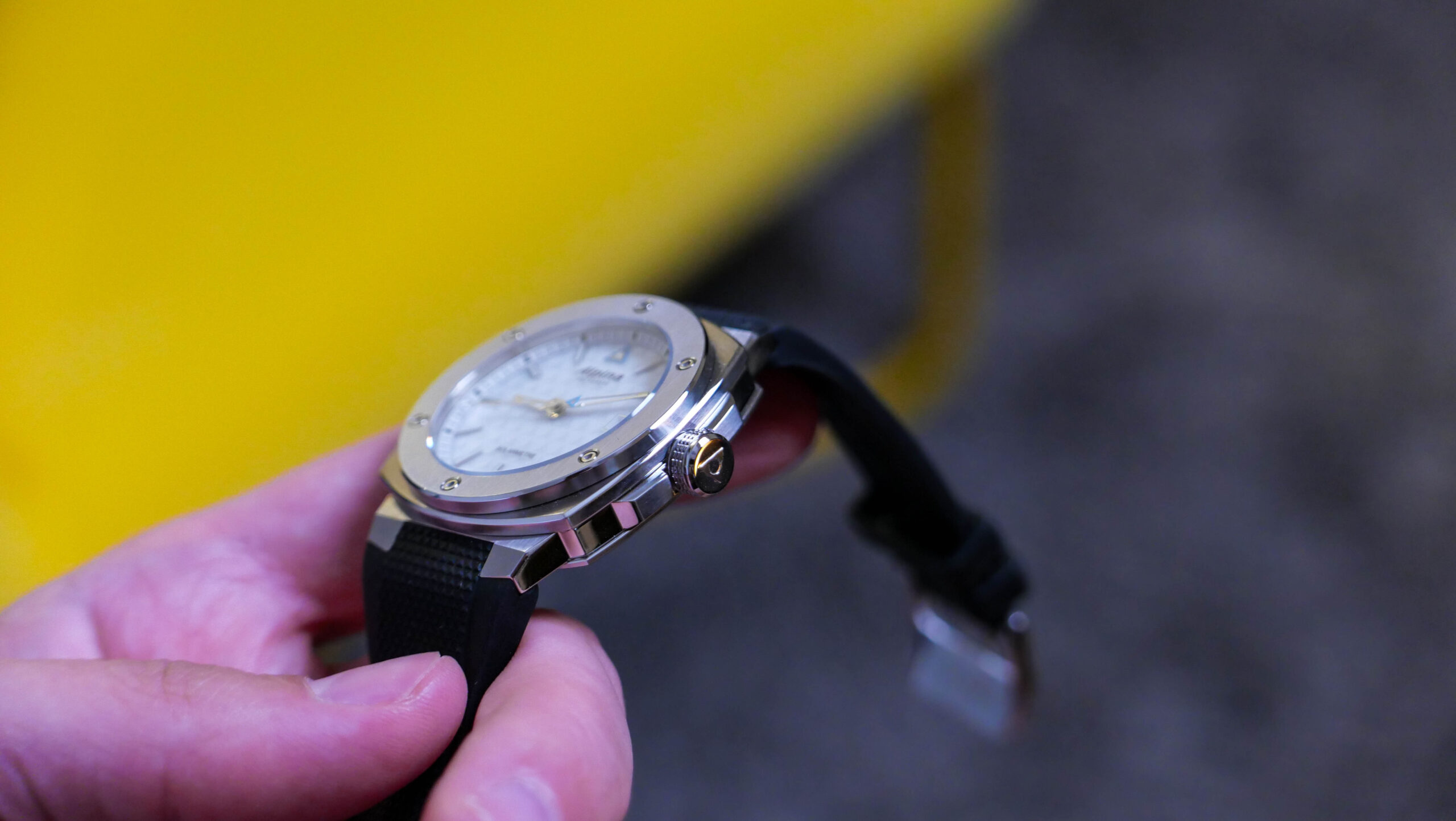
Even though Alpina has made the jump over to a solar powered quartz watch, they haven’t left their design roots behind, which is why you might find the look very familiar. Taking a quick look reveals the exact same case shape as the rest of their Alpiner Extreme line that utilizes the automatic Alpina AL-525, based on the Sellita SW200-1. I see this as a positive feature of the watch, instead of Alpina moving over to a generic round case shape to house the quartz movement, they’ve kept their signature cushion shaped mid-case, with beautifully rounded corners. Sitting on top of the case is a perfectly round bezel, which adds a layer of complexity and interest to the overall cohesion of the watch.
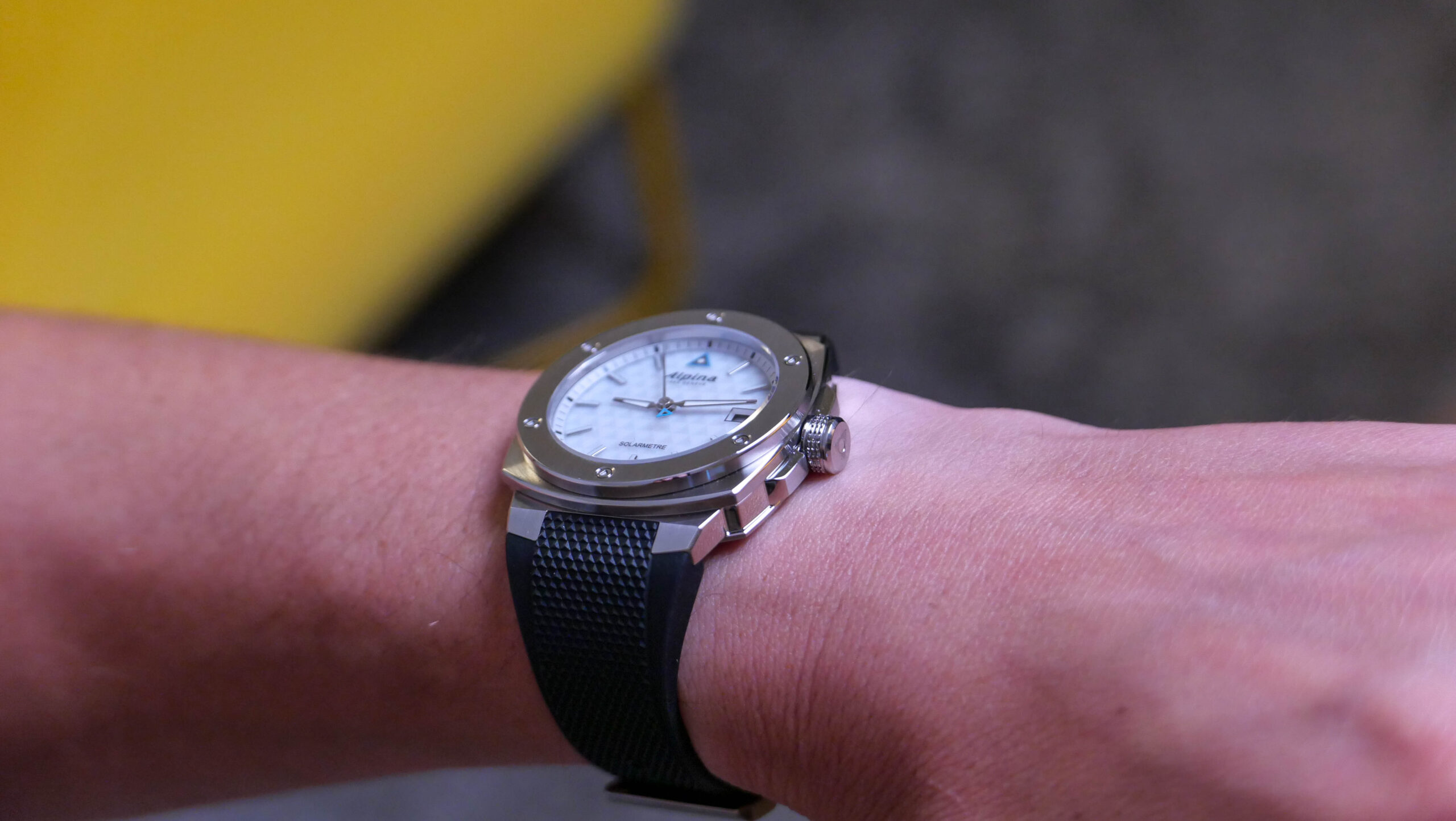
Focusing in closer on the bezel reveals a nice series of exposed screws, which to my delight are functional and not just decorative, and they’re also triangular head screws mimicking Alpina’s mountain logo emblem, a theme we’ll find throughout the watch. The crystal is perfectly flush with the bezel, which adds a nice modern flair instead of attempting to lean retro with a domed shape. The flat crystal compliments the overall thin design of the watch, which measures in at a very respectable 8.35mm thick. For some reason, when I handle the watch, and wear it, it doesn’t feel that thin – perhaps due to all the layers and angles added to the case shape, especially when viewing it from the side.
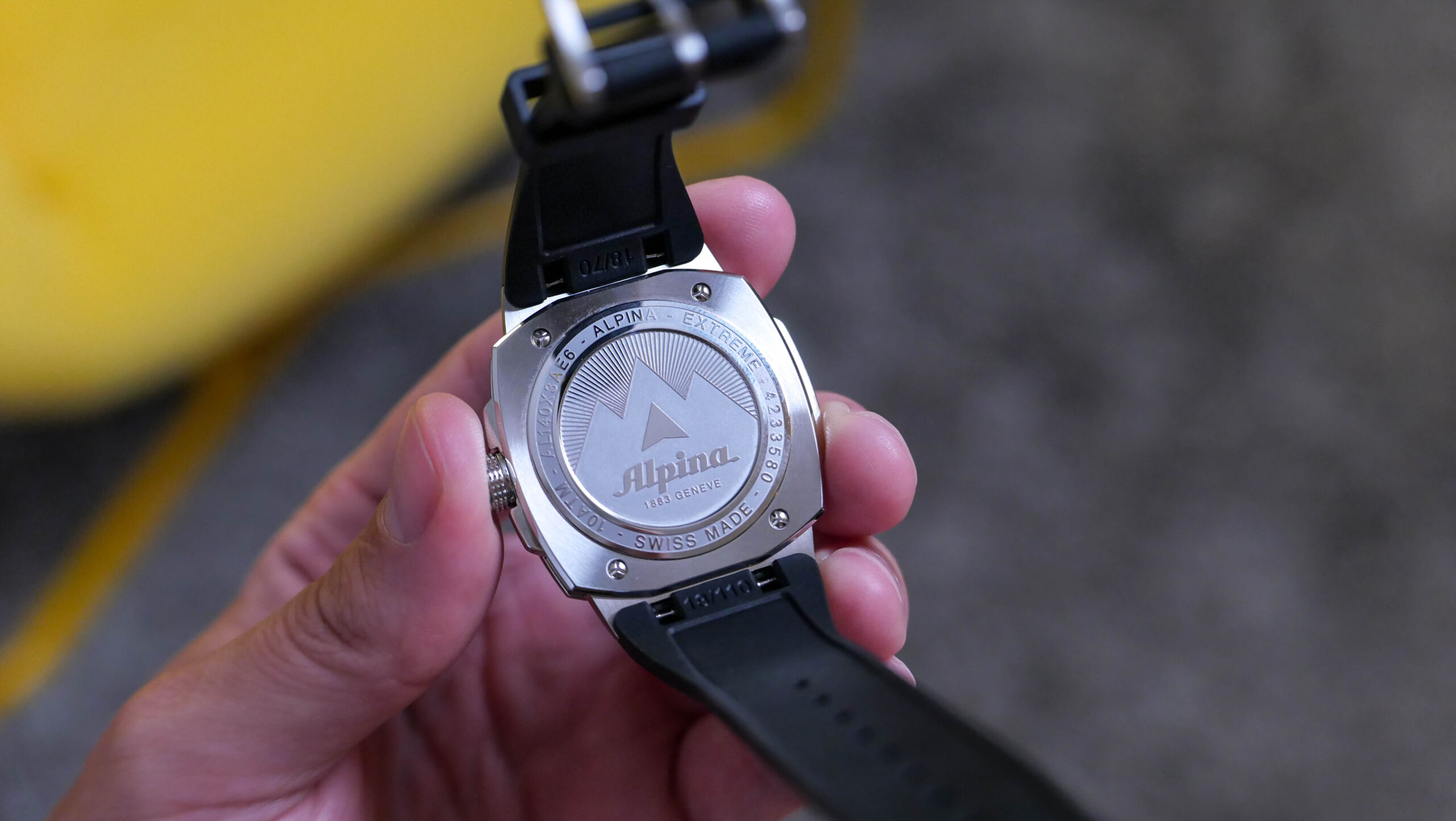
The lugs are extremely short and stout, with zero curvature, lending the watch a bit of poke when on my 6.5 in wrist, but without any extreme overhang. The crown is very well sized and in proportion with the rest of the watch, it’s easy to grip with its knurling, and simply looks really good. The crown is also slightly nestled into the side wing of the watch, I guess you could consider it a pair of shallow crown guards.
Dial
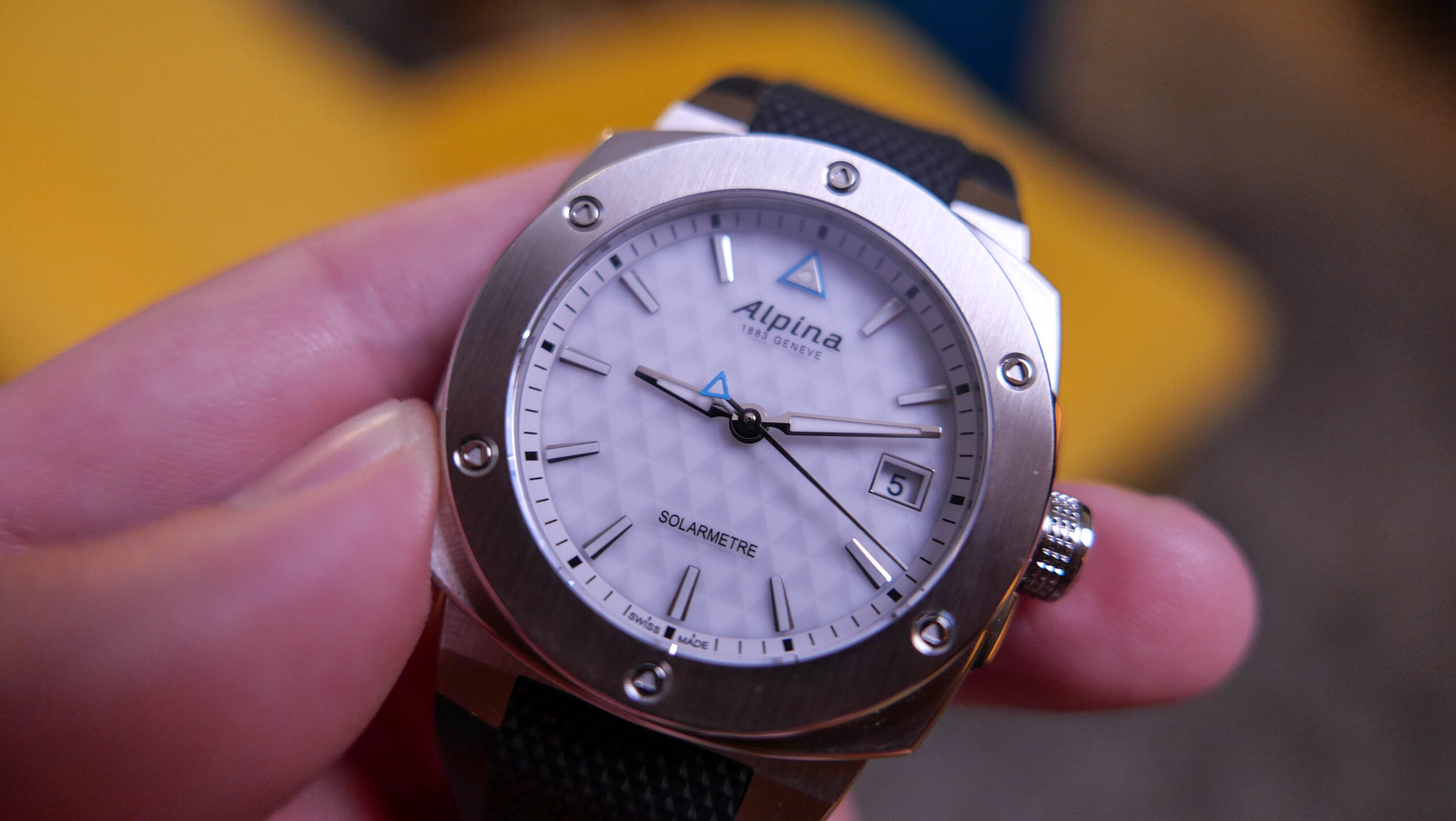
At first, the dial appeared ghost like to me, with a faded off-white and light grey appearance, of course with the alternating triangular mountain emblems. There is a functional reasoning for this, and it happens to be the most prominent technical achievement of the watch, and that’s simply its ability to solar charge through the dial itself. Many solar watches these days have a visible photovoltaic layer beneath the surface of the dial, but Alpina has managed to circumvent this often perceived design flaw but creating a visually opaque dial that still allows just enough light through for efficient absorption. It’a a clever balancing act by Alpina, that to me at least creates a 90% normal looking dial, and adds a layer of uniqueness to Alpina’s first ever solar watch.
The rest of the dial layout follows a rather restrained appearance, with classic positioning of the small date window at 3 o’clock, full logo set at 12 o’clock, and a subtle hint of its solar heart with “Solarmetre” text at 6 o’clock. The hands and baton markers of the watch are almost clinical in appearance to me, very clean “Swiss watchmaker” in appearance, which I think is partly due to the white lume and silver against the white dial background. Despite the watch being only 8.35mm thick, the dial sits quite low inside the case, providing just enough room for a slopped minute track on the outer peripheral of the dial. The baton markers are applied, and the minute and hour hands have a soft dauphine shape, leaning more towards a faceted sword shape. The seconds hand is long and slender, reaching all the way to the minute track, and stylized with a cool light blue triangle counter-weight.
Final Take
If you love the look of Alpina’s mechanical Alpiner Extreme collection, but you want the convenience of a 10 month solar power reserve, this could be the ticket for you. The watch wears excellent, albeit a tiny bit large / sporty for a 37.5mm case on my 6.5 inch wrist, and it alleviates the concerns of mechanical watch maintenance, accuracy issues, and power reserve issues. Of course with those benefits you lose the fun of a mechanical watch.
Alpina has created something very unique with the dial, but it appears slightly dull to me in everyday wear, mainly due to that flat ghost like hue to the dial. There is certainly a trade off here that sacrifices a perfectly crisp appearance for the function of the solar powered movement, nothing astronomical, but noticeable. The rest of the watch is a tried and true design used across the Alpina range, and you can’t go wrong if you’ve been a fan of what this watch brand has been producing for decades now.

Leave a Reply