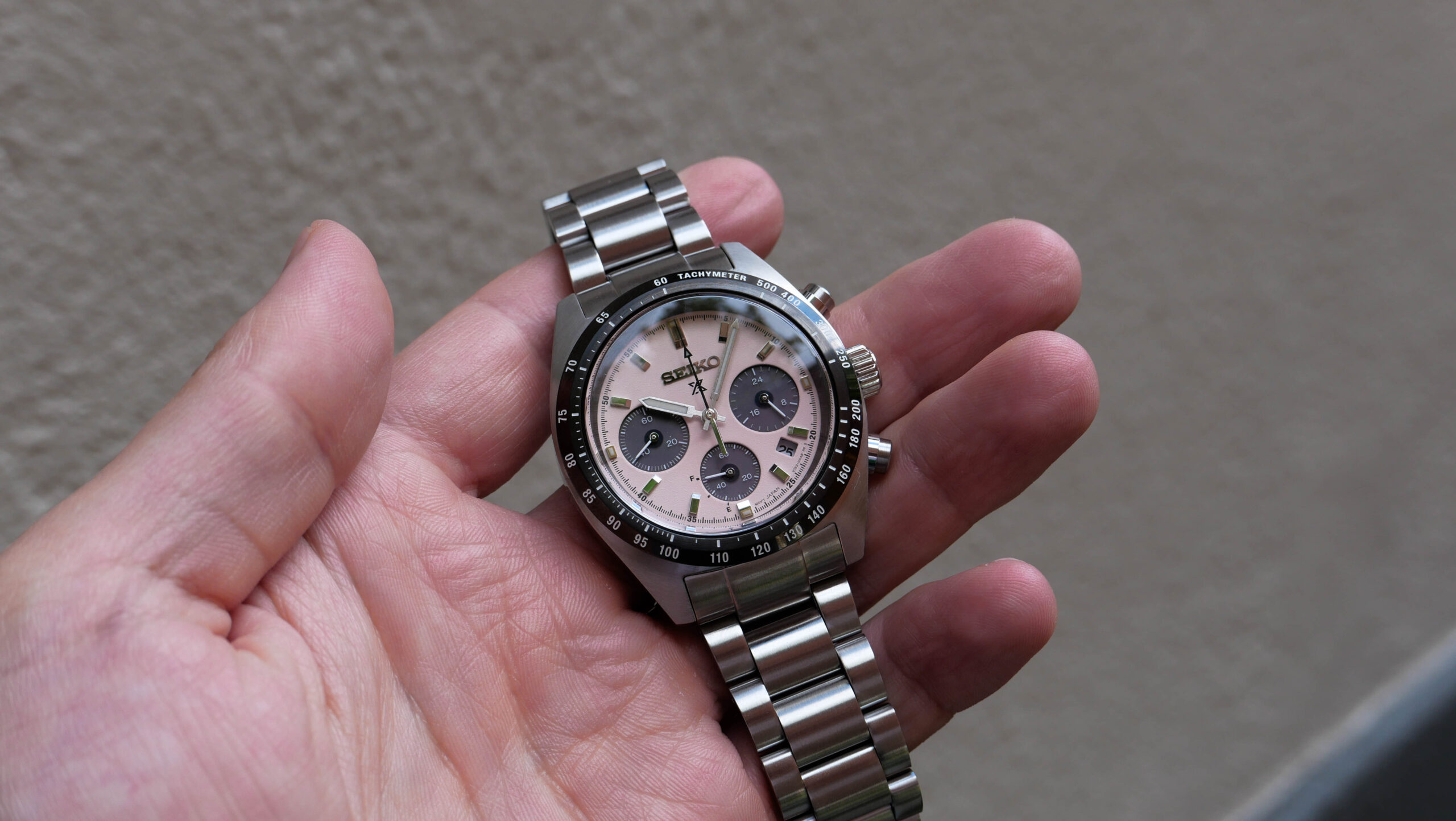
The Seiko Speedtimer has had a massive surge in popularity in recent years, especially with the now outgoing panda dial model ref. SSC813. This is a watch that’s gone through a nice evolution of adjustments over the years, in terms of its overall design language and wearability as a chronograph.
At the beginning of this year, in February, Seiko announced the launch of a new refresh for the Speedtimer. This meant the discontinuation of the wildly popular ref. SSC813, and the introduction of three new versions, with essentially the exact same case proportions, finish, and internals, but with updated dials including a silver/white ref. SSC961, pale/surf green ref. SSC965, and the reference we’ve had on hand with us, the SSC963 and its sandblasted salmon/pink dial.
First Impressions
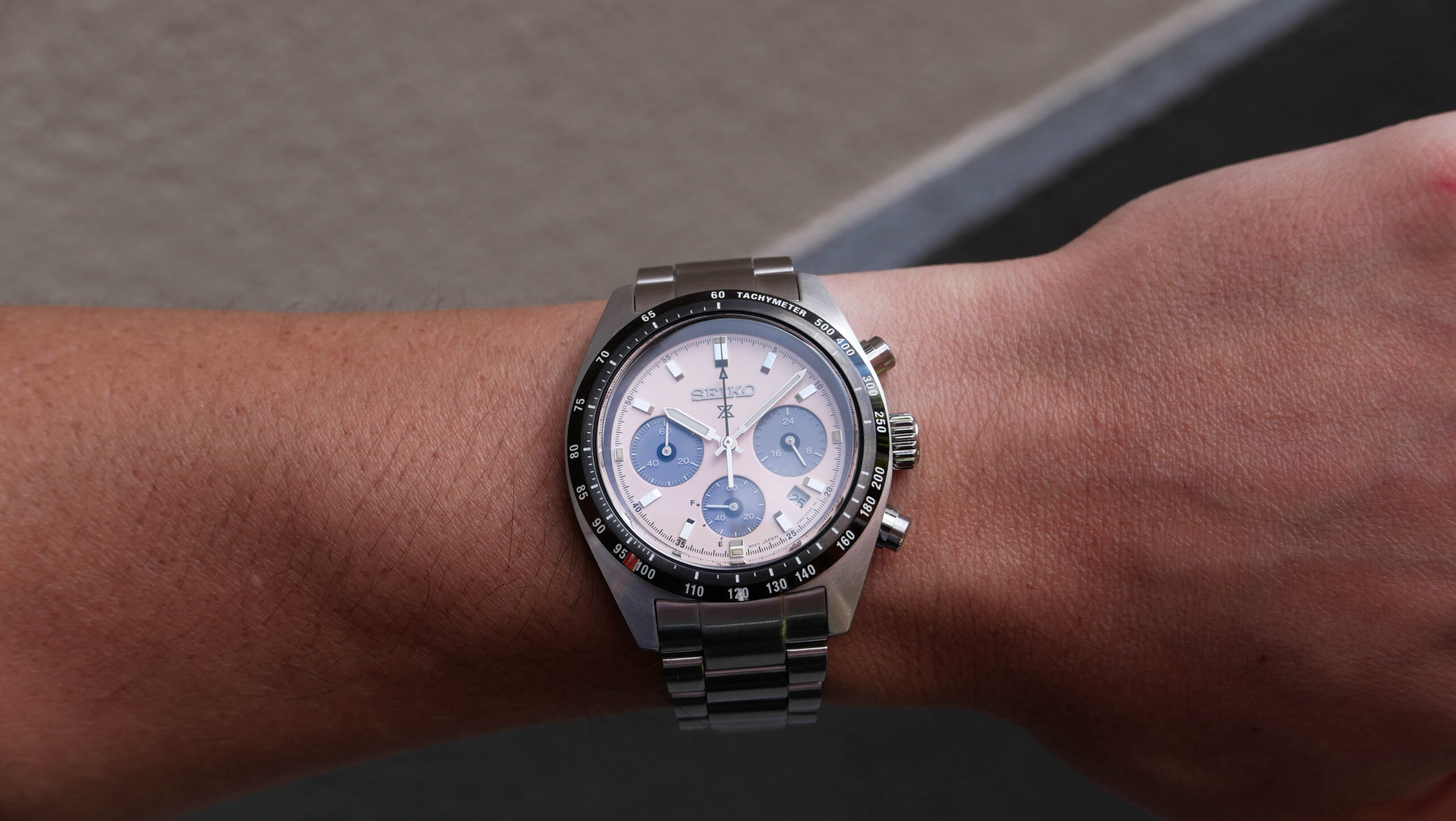
As someone who hasn’t handled too many Speedtimer’s in the past, I was excited to get this watch in our studio courtesy of Gem Bijou watch store in Toronto. Theoretically, the watch looks excellent in images, it’s simply a well rounded chronograph manufactured in a reasonable size to suit mosts wrists, and it seems to have all the curves and bevels in the right places. Additionally, the watch has a bracelet that actually suits its sporty tool-like demeanour, albeit with that very recognizable Seiko jingle noise.
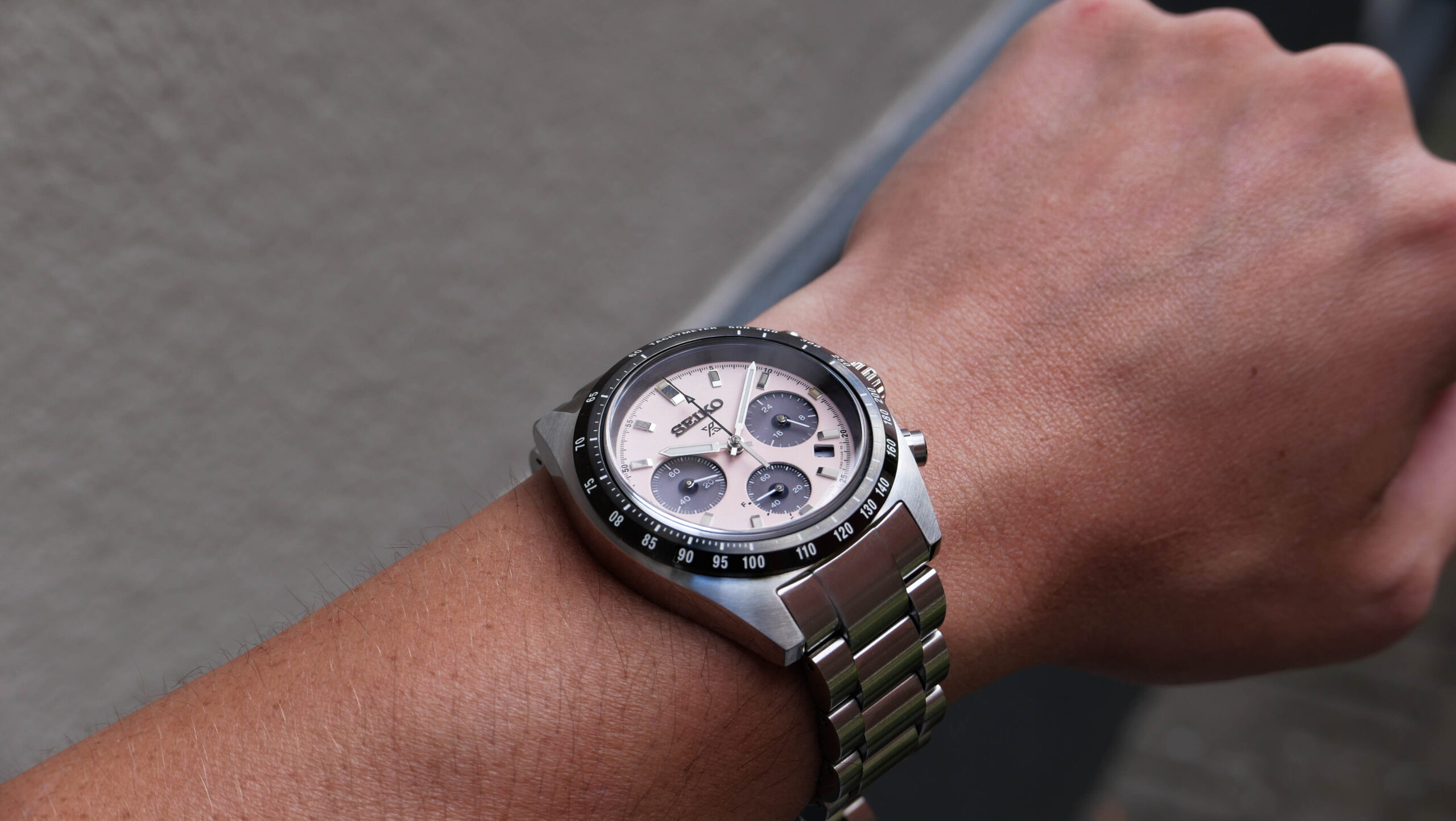
Generally, with quartz watches, and even solar powered quartz watches like this one, they feel lighter in-hand. Not light as you’d expect from a highly skeletonized mechanical movement in a small case, but more hollow in feel, due to larger case sizes with less heavy moving internal parts. I was very surprised at the initial heft in-hand of this watch, which actually weighs in at 165 grams on the scale, merely 4 grams heavier than the outgoing ref. SSC813.
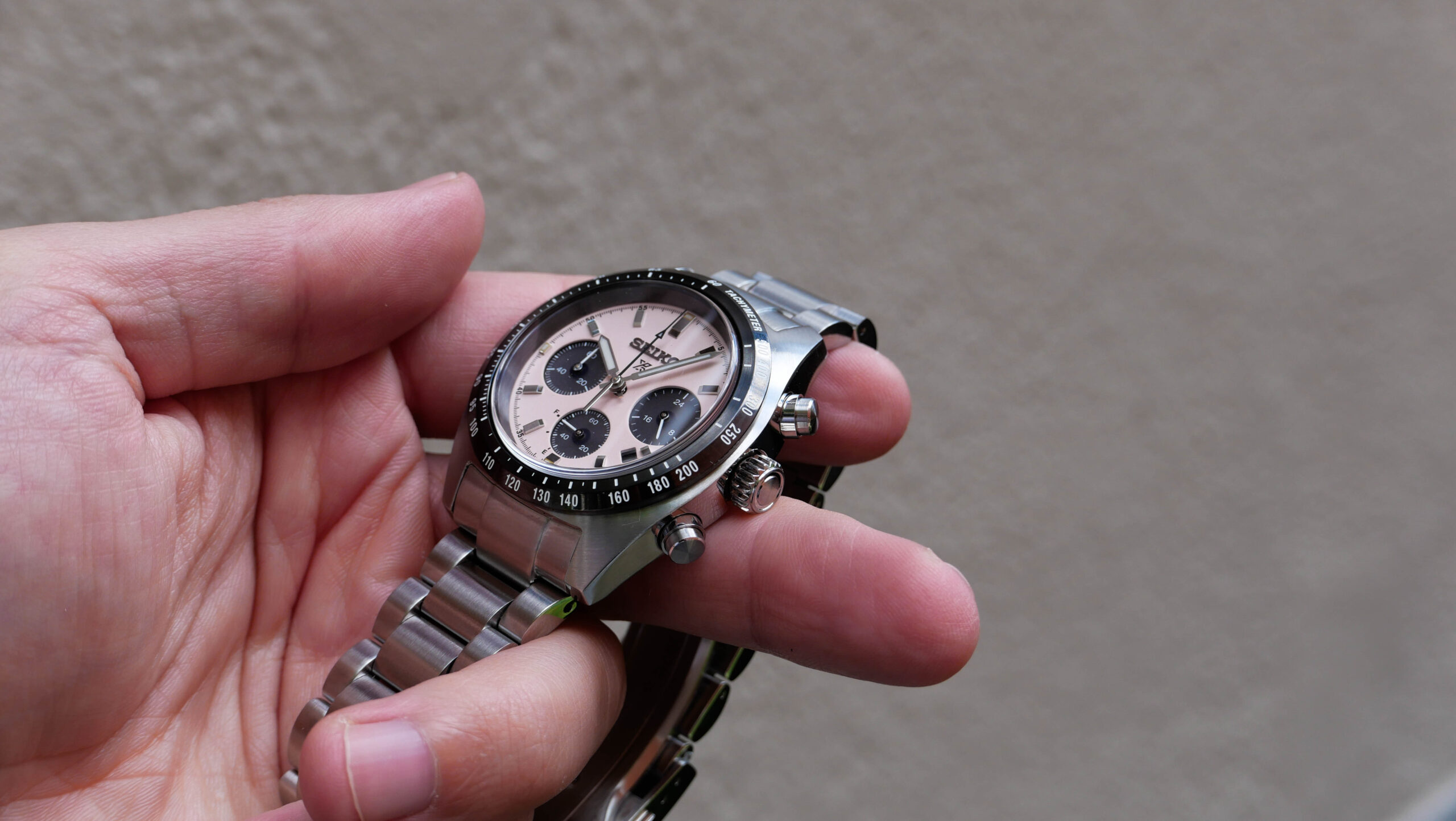
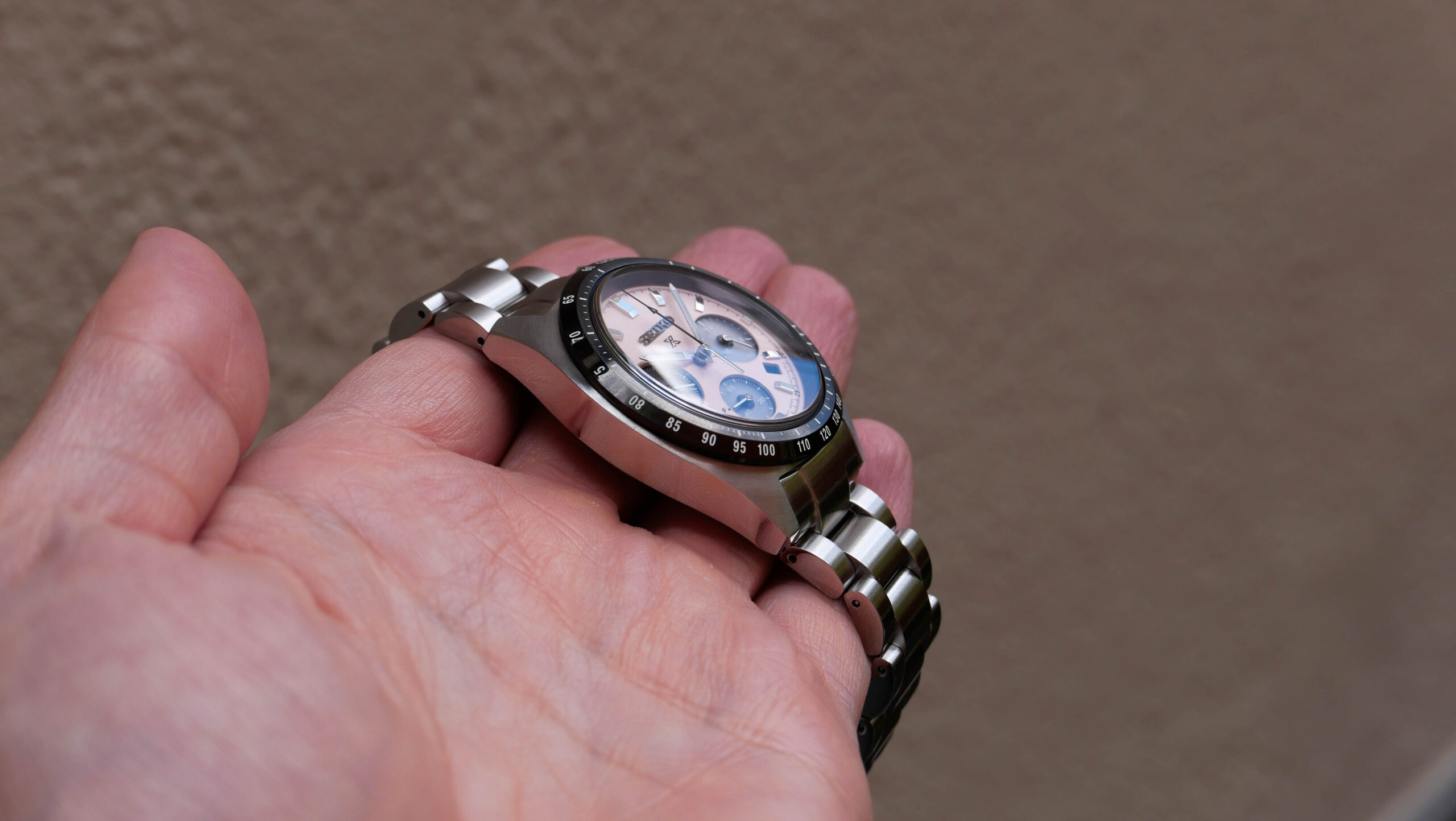
The watch is heavy on wrist, but its case size at 39mm in diameter and its compact lug to lug of 45.5mm negate most of the heft issue. It’s also not overly thick at 13.3mm, especially considering Omega just launched a new Speedmaster reduced today with a thickness of 14.75mm. So, it wears fairly well on my 6.5 inch wrist, but after a few hours of wearing it, I could feel the weight starting to take its toll on the comfort situation.
Dial and Overall Appearance
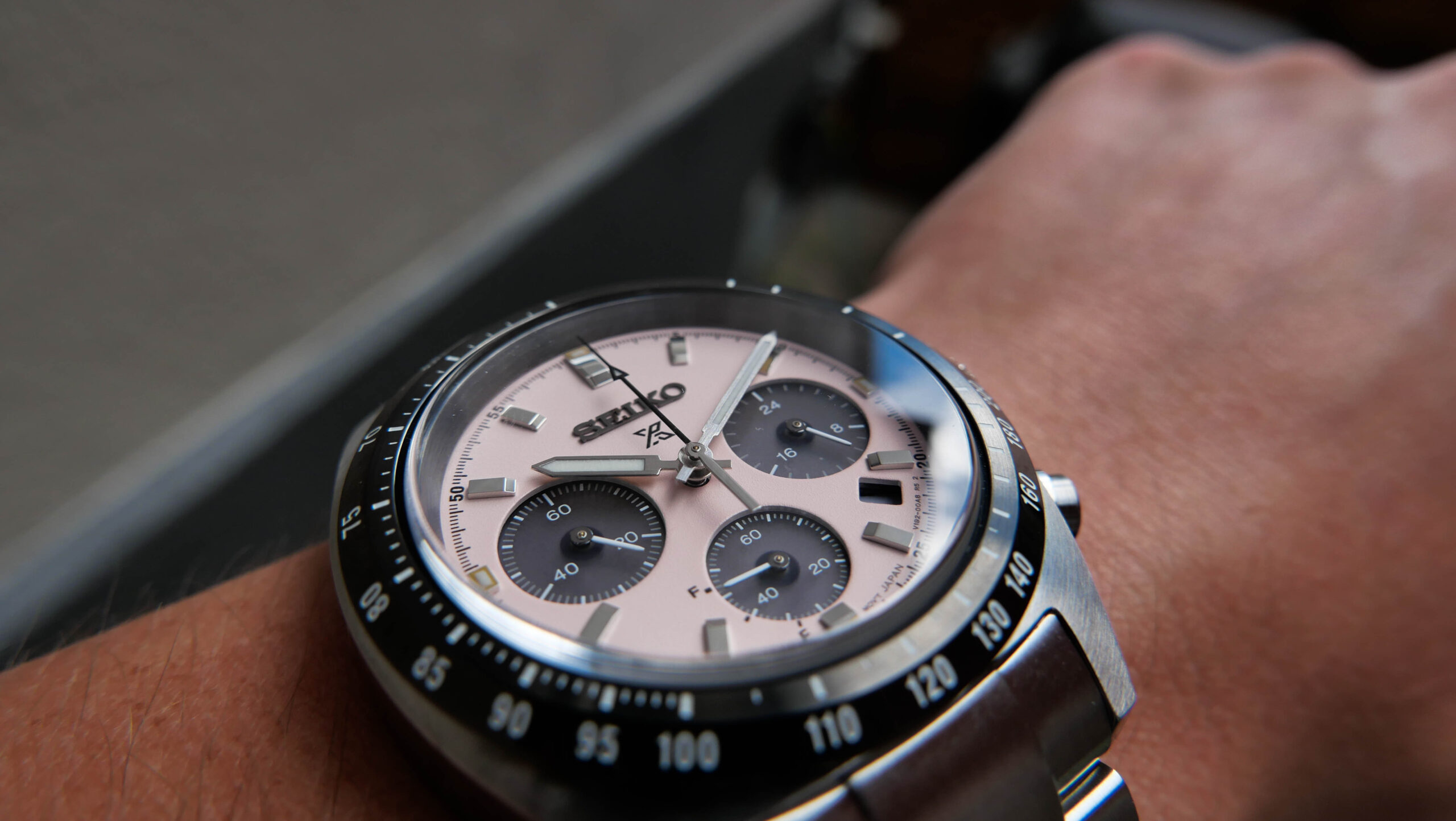
The highlight of this watch, for me at least, but I believe for most of us, is going to be the really subdued and beautifully finished salmon dial. The dial is actually sandblasted, giving it a gorgeous low lustre matte finish, performing excellent in both low light and direct light situations. The hue of the light pink salmon shade is extremely light, nearly disappearing or turning into a Khaki color in direct light. Dimly lit, or low light situations, for example during a sunset, is really where the light pink pigment is on full display.
The subdials are still contrasting on this variant, which appear to have a smoked gray with brown undertone hue to them, and they’re glossy, contrasting very well against the sandblasted dial. The subdials include a 24 hour indicator at 3 o’clock, a 60 minute counter that doubles as a power-reserve indicator at 6 o’clock, and a running small seconds at 9 o’clock.
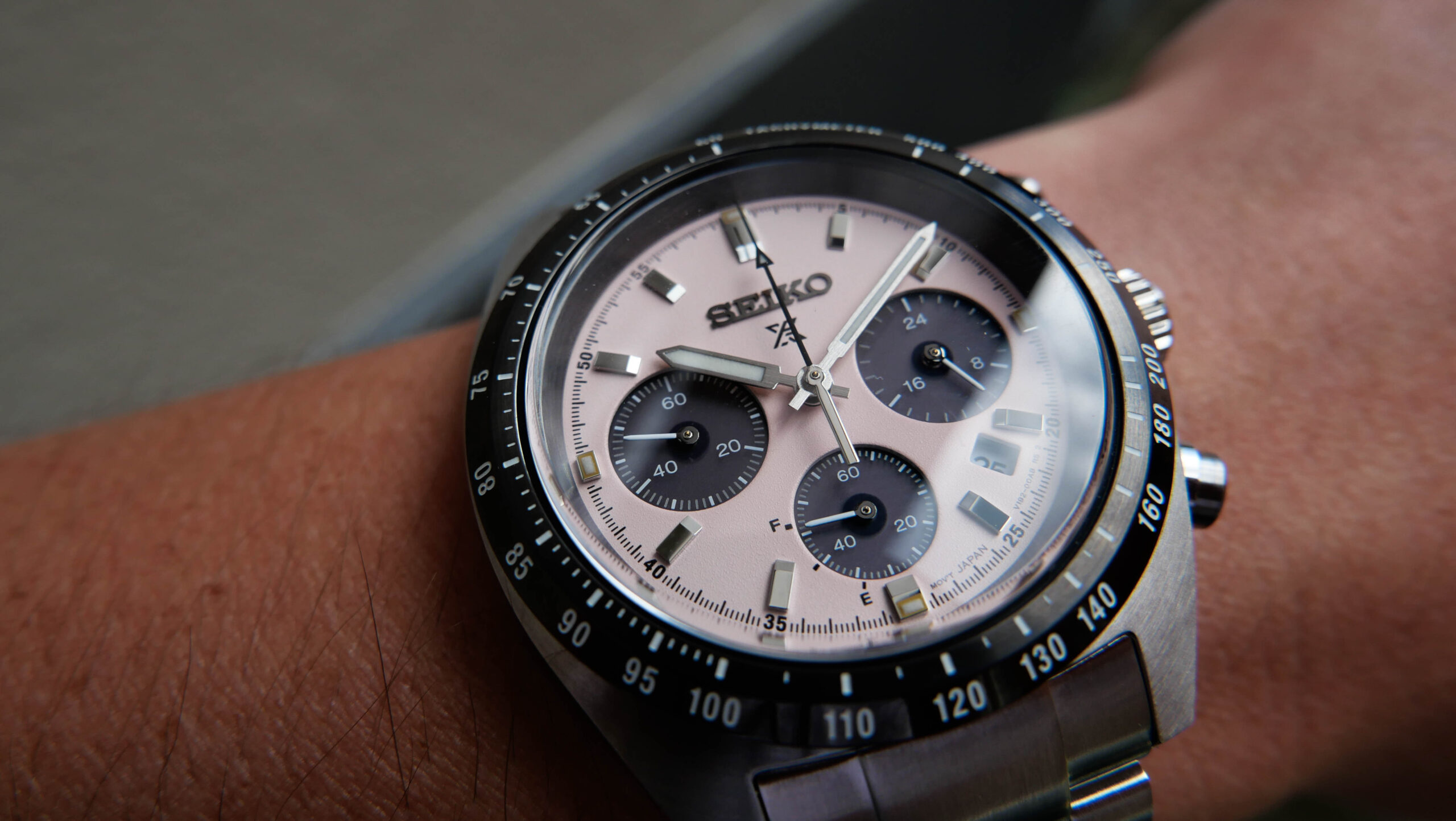
As usual for the Speedtimer, the small date window remains between the 4 and 5 o’clock applied baton markers, with the Seiko logo at 12 o’clock. The sword shaped hands have adequate sizing, but seem to blend into the dial a little too much for my liking, which seems to be a product of the silver finish and Seiko derived “LumiBrite” cream lumed filling.
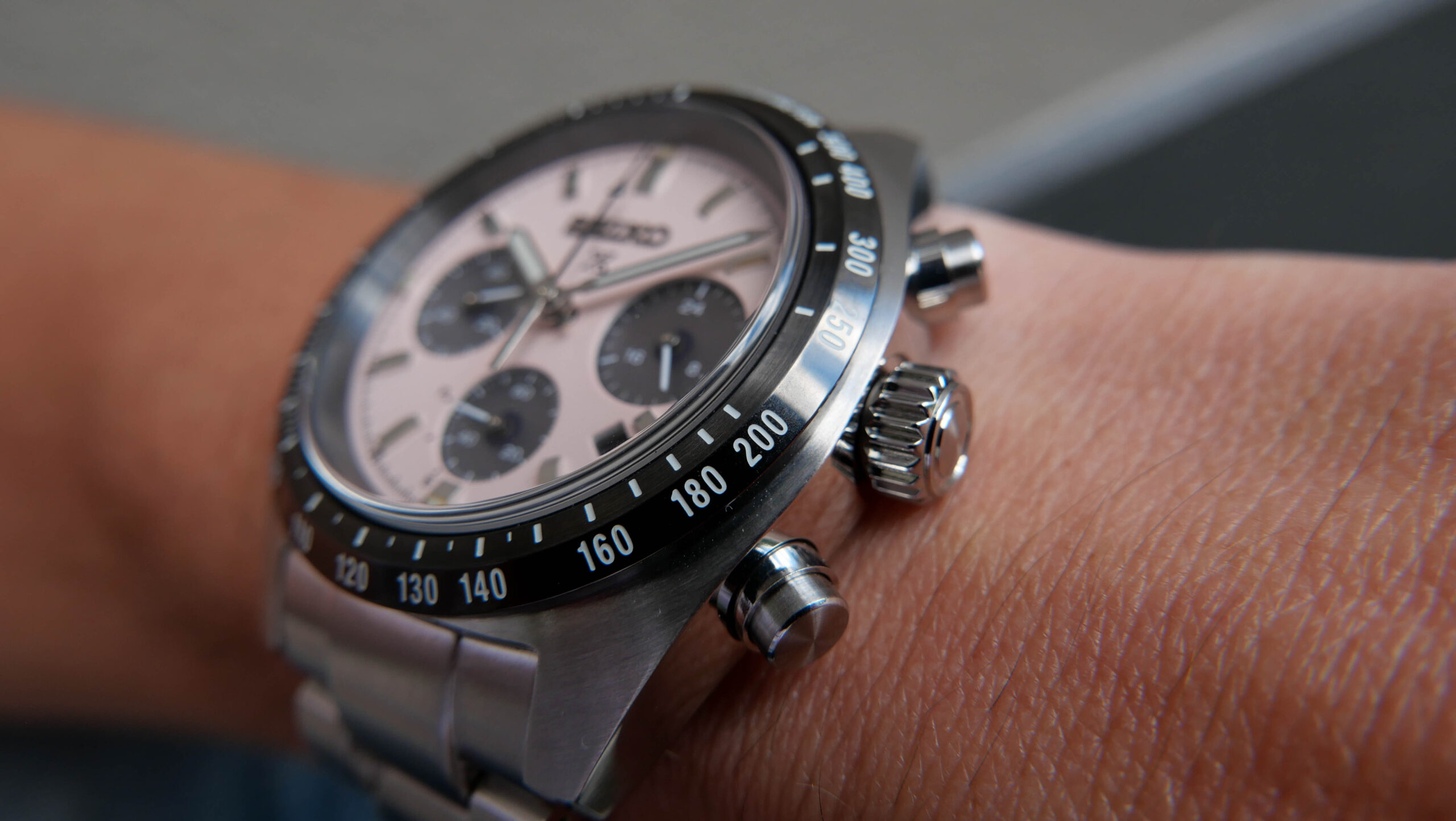
Both the outgoing ref. SSC813 and the new series have fixed black bezels, regardless of which dial color you go with. At a distance, it looks as though the tachymeter scale could be engraved into the bezel, but it’s merely printed on, a reminder of the price point we’re working with here, which by the way is $725 USD. The bezel could be played off as ceramic due to its excellent black PVD coating, which appears slightly glossy but with a nice deep inky black color.
Final Thoughts
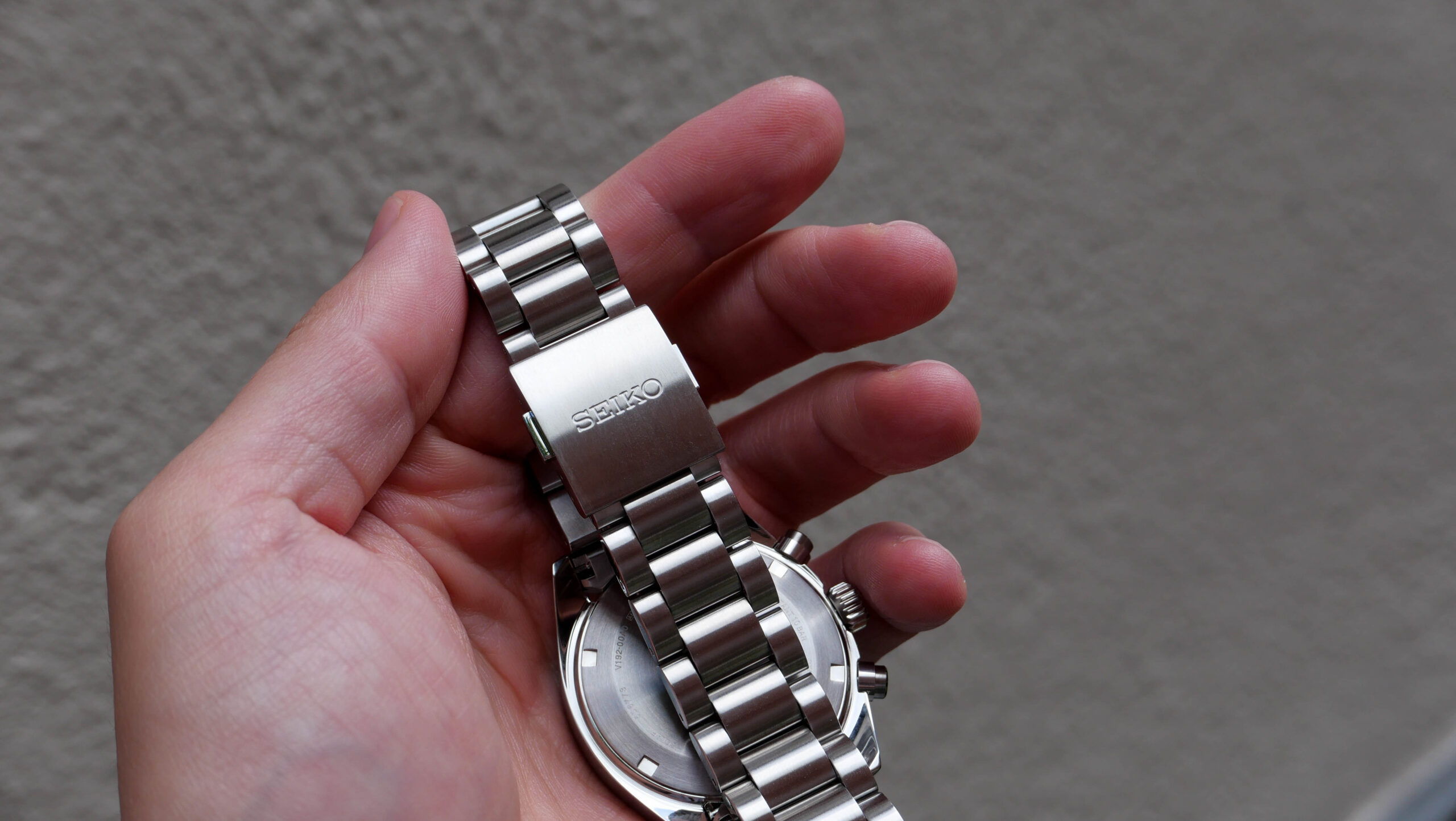
For a solar quartz powered chronograph at this price point, you can’t really go wrong. You’re getting Seiko workmanship and design in a very attractive chronograph format. Actuating the chronograph is very pleasant, with no mechanical click, but rather a soft push. Resetting the chronograph is really neat as well due to the V192 movement, as the central seconds hand returns to the zero position by sweeping around the entire dial.
This is a fun but functional watch, which really encompasses what Seiko is all about. It may not be mechanical, but it comes with many benefits a solar powered watch has to offer.

Leave a Reply